


Research Opportunities
Feed Your Curiosity
Learning Through Discovery
Training in research methods allows students to investigate the questions that interest them most.
Geography
It is a rare privilege for undergraduates to explore the issues that most intrigue and motivate them using the equipment and methods of professional scholars. Valpo geography students are introduced to research methods in the many courses that have field components, and professors encourage students to progress through research-based class projects to independent research. Students learn how to frame research questions, design projects, collect and analyze data, and present their research in oral, written, and visual formats. Because the field of geography is quite diverse, the range of topics students may choose to investigate in a supervised independent-study course is broad.
Because communicating research findings is an important part of professional practice, students are encouraged to present their research at academic and professional conferences throughout the Midwest and occasionally beyond. These gatherings introduce students to the world and the work of professionals in the field, inspiring a lifelong interest in research and a thorough understanding of various geographic methods and techniques.
Exceptionally qualified students may choose to pursue honors work during their senior year. For geography students, “honors work” is defined as a major independent project consisting of either
- Original basic research on some geographical question, or
- A solution to an applied geographic problem.
Literature reviews and other descriptive studies, no matter how exhaustive, do not constitute honors work and are better suited to independent study.
Conducting an Honors Project
Honors work constitutes a significant investment of time and effort, both on the part of the student and the faculty advisor. The process spans an entire year — from topic proposal and acceptance to project completion — and so involves several steps. Honors projects in geography involve 1) identifying a geographic problem or question, 2) collecting data and other information related to the problem, 3) analyzing this data and information, and 4) arriving at a conclusion.
Honors work projects in geography must include the following components:
Research Option
- Thesis statement
- Review of relevant literature
- Discussion of research methods and data
- Analysis
- Conclusion
- Bibliography
Applied Option
- Statement of problem and purpose
- Review of relevant literature
- Rationale of methods used
- Discussion of data and its acquisition
- Statement of outcomes/results
- Bibliography
Meteorology
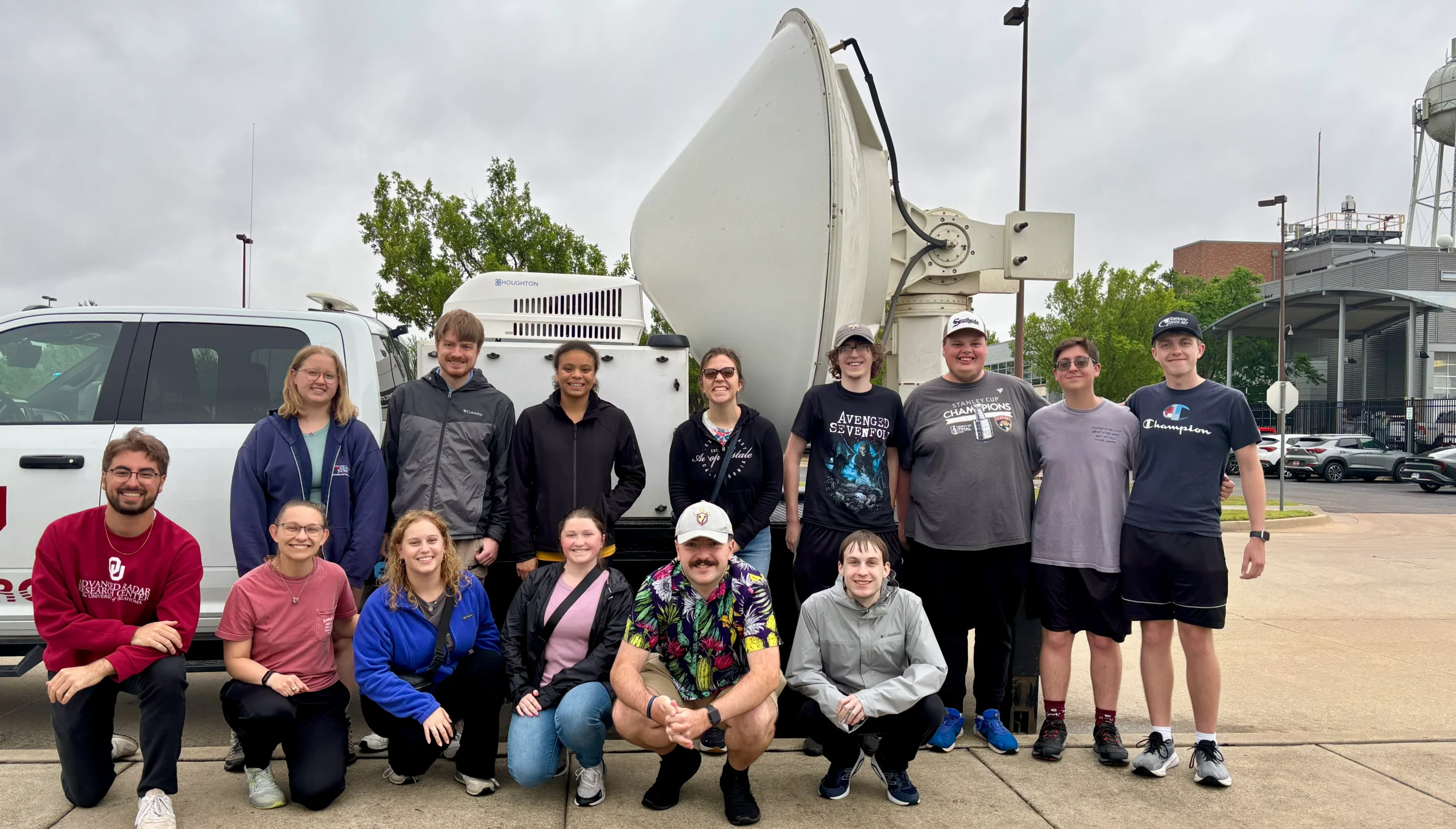
With superb tools and rigorous training, students in Valpo’s meteorology program have opportunities to investigate brand-new research questions. The often dramatic weather events of Northwest Indiana, from lake-effect snow to tornadoes, offer a rich source of research material, and students produce research that adds to the store of knowledge that ultimately helps make communities safer.
Instruction in research methods begins in the classroom, and the department encourages majors to progress through research-based class projects to independent research. Students learn how to frame research questions, design projects, collect and analyze data, and present their research in oral, written and visual formats. Because communicating research findings is an important part of professional practice, students are encouraged to present their research at academic and professional conferences throughout the Midwest and occasionally beyond. These gatherings introduce students to the world and the work of professionals in the field, inspiring a lifelong interest in research and a thorough understanding of various geographic methods and techniques.
An especially exciting event for Valpo students is the Celebration of Undergraduate Scholarship, an annual student research conference sponsored by Valparaiso University. Meteorology students present research covering a broad range of topics at this gathering. A sampling of meteorology research presentations from a recent celebration:
- ” ‘Sounding’ Like Lake-Effect Snow: Evaluating the Thermodynamic and Synoptic Setup of Northwest Indiana Lake-Effect Events Using Local Profiles and Numerical Modeling,” by Adam Brainard, Russell Danielson, Kaitlyn Heinlein, Kevin Wagner, and Assistant Professor Kevin Goebbert (2014 Board of Directors Award Winner)
- “Synoptic and Lake-Effect Classification of Snowfall in the Lake Michigan Region: Deriving Clarity Using WRF Simulations,” by Alex Caruthers and Ryan Connelly
- “Interannual and Seasonal Variability of Tropical Cyclone Genesis in the Northwest Australia Basin,” by Eleanor Delap, Nathan Kelly, Mallory Row, Zachary Sefcovic, and Assistant Professor Kevin Goebbert
- “Synoptic and Lake-Effect Classification of Snowfall in the Lake Michigan Region,” by Eleanor Delap, Sarah Fingerle, Kaitlyn Heinlein, Allison Young, and Associate Professor Craig Clark
- “Exploration of Synoptic-Scale Patterns in Early-Season Snowfall Around the Lake Michigan Region,” by Andrew VanDe Guchte, Zachary Sefcovic, and Assistant Professor Kevin Goebbert and Associate Professor Craig Clark
- “Forecasting and Intercepting the 28 May 2013 Bennington, KS Tornadic Supercell: A Student Perspective,” by Kevin Wagner
Contact Us
We welcome inquiries from prospective students, fellow researchers, and community members.
Contact the Department Chair: Bharath Ganesh Babu
Administrative Assistant: Zoe Vander Vinne
Staff Meteorologist: Leanne Blind-Doskocil