“There will be days when you feel that all hope is lost. But hope is not an object that can be misplaced or taken away. Hope is not an emotion that you may or may not feel. Hope is not a positive outlook that may be hard to come by. Hope is a practice, a discipline, a horizon.” From “‘Faith, Hope, and Love Remain,’ or Find Purpose” in For Such a Time as This: An Emergency Devotional, by Hanna Reichel.
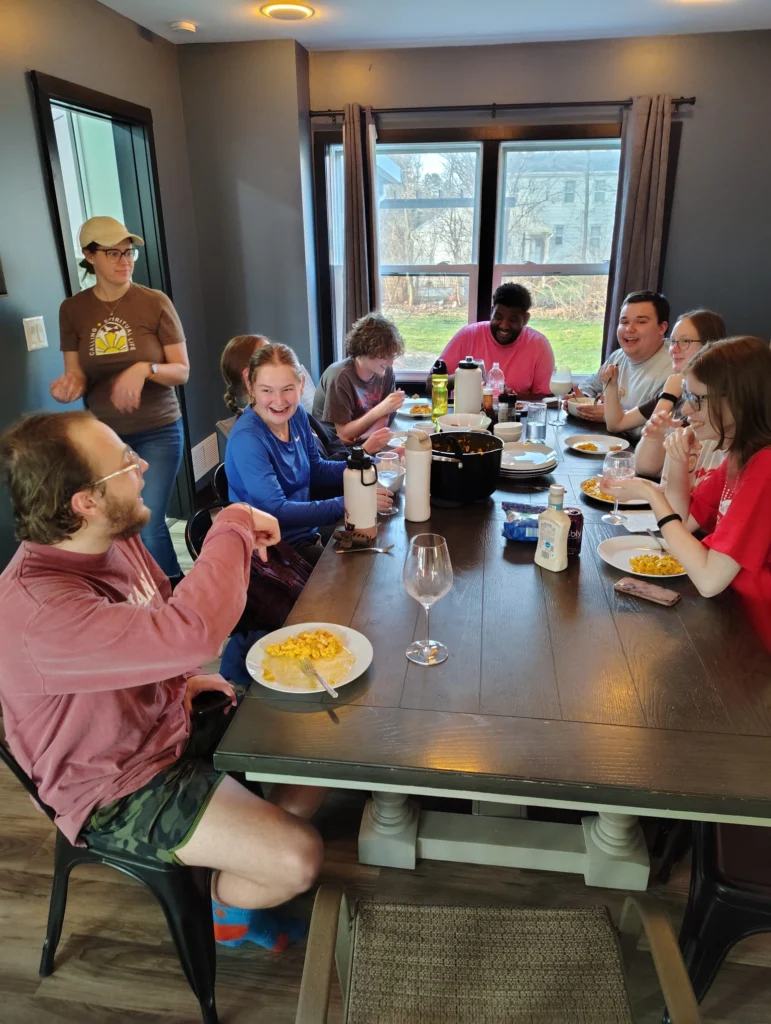
Our recent spring break service trip with a group of 10 Valpo undergraduates was such a practice of hope – connecting with each other, as well as engaging with local efforts to address big challenges like industrial pollution, invasive species, racial inequality and food insecurity. During this time, one theme powerfully emerged for our group: even though society’s structures might create precarious conditions for communities and the environment, groups can still come together to help protect those who are vulnerable.
We invite you to read student descriptions and reflections on our trip, below.
Ethan Mason
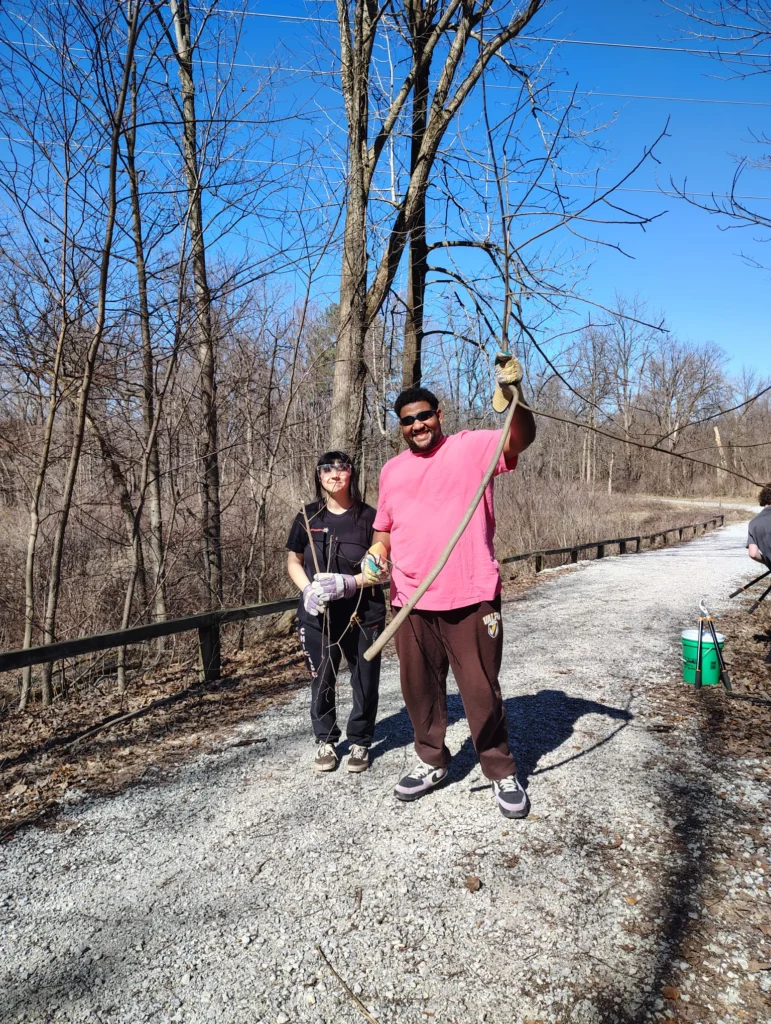
Throughout our trip, one thing that quickly came to mind was how a lot of activities we did and the people we met were interconnected. Some connections were small, such as hearing a woodpecker outside of the window of our AirBnB the day after we had to find one on our scavenger hunt hike at Shirley Heinze Land Trust. Some were bigger, like learning about the industrial history of the Pullman neighborhood before ending back there the next day to install fire alarms with the Red Cross. The largest connection of the trip for me, however, was between Billie Kerner (Potowatomi Jibek Mbwakawen) and Libré Booker (Living Green Garden). Both individuals saw the importance of gardening and farming for community building and development, as well as the importance of conservation and letting nature run its course. The sense of commonality in these viewpoints is profound, despite the very different lived experiences that these two individuals shared with us on this trip. I believe that nature is very important and that connecting with it brings out our greater humanity. Finding passion in nature may help bridge the divides in all areas of life that we face today, whether it be politics, the separation of the internet, or more daunting challenges like defeating bigotry and hatred. No matter our background, we can all take a lesson from these women and strive to be better connected with nature and thus with our communities throughout our daily lives.
Megan Goff
The first place we visited was the Indiana Dunes National Park, a wide span of land that covers 10 different habitats. We were guided down one of their hiking trials, exploring one of the forests, and were shown native and invasive species along the way. We were also shown the Bailly Homestead house, a house that belonged to Joseph Bailly, a fur trader, learning about his and his family’s stories, and talking about the women and indigenous tribes that made his success possible. Further along, we were taught and shown the process of how the indigenous tribe, the Potawatomi, used sap from sugar maple trees, and turned it into syrup and sugar coins for their tribe’s use during the winter, and for trading with other tribes and European colonizers. After the tour of the syrup making process, we were taken by the Calumet river and shown wetlands, learning about their disappearance over the years, and how that seems to be connected with flooding in areas and even raising water levels.
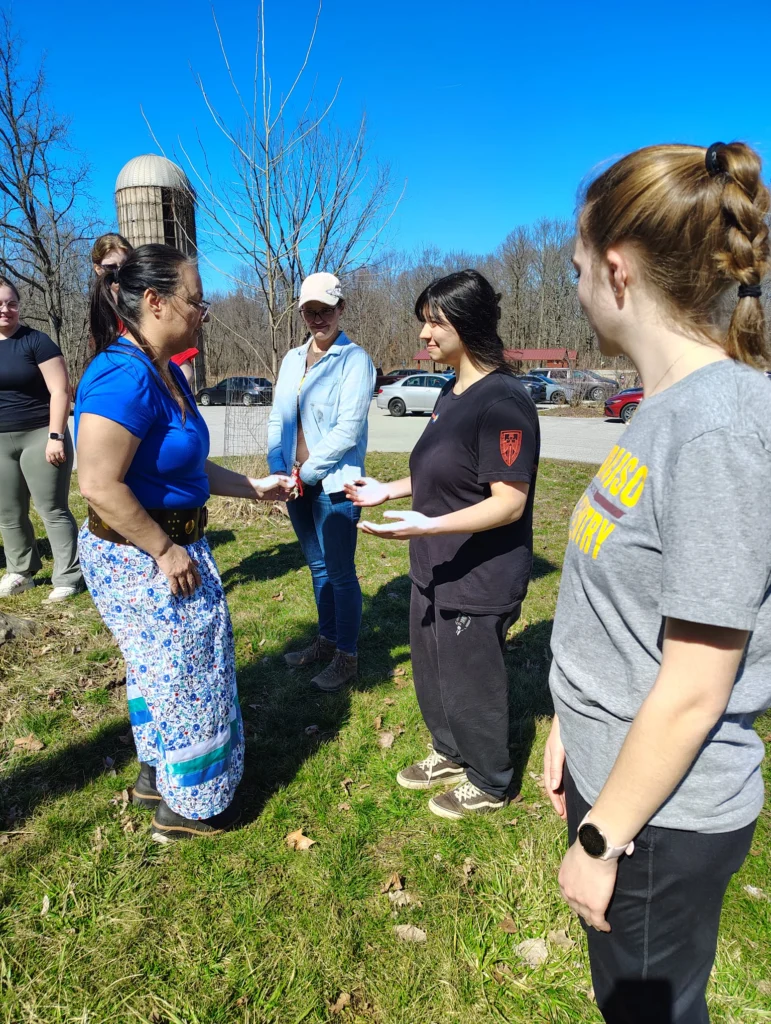
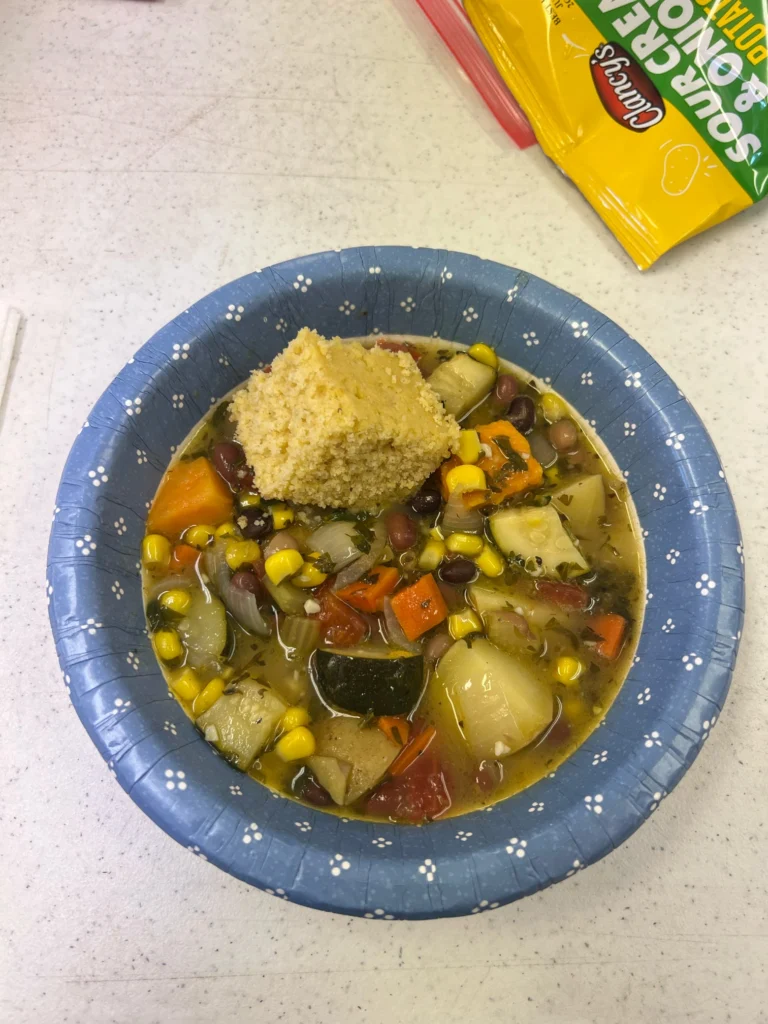
A few days later, we visited Shirley Heinz Land Trust, and there met their team and a visitor, Billie Kerner, founder of the nonprofit organization Jibek Mbwakawen. She is from the Pokagon Band of Potawatomi, and first talked to us and shown us items she brought, like a drum made from a turtle shell, she had much respect for it, akin to a grandmother, her gathering bag, and even antler, which she explained can be used for farming. She went on to tell the group about how women had more power in her tribe, compared to most of the systems in white America. General teachings of life also were heard, like telling us that when you accept gifts, you also accept responsibility, and that even just respecting nature, asking Earth for permission, and just being outside, can be very freeing and healing to the human soul. Before she left, she offered us 3 sister soup, a soup made entirely from the inner workings of a garden, and she ‘smudged us’, waving sage smoke around each one of us that chose to participate, and giving us lovely personal affirmations.
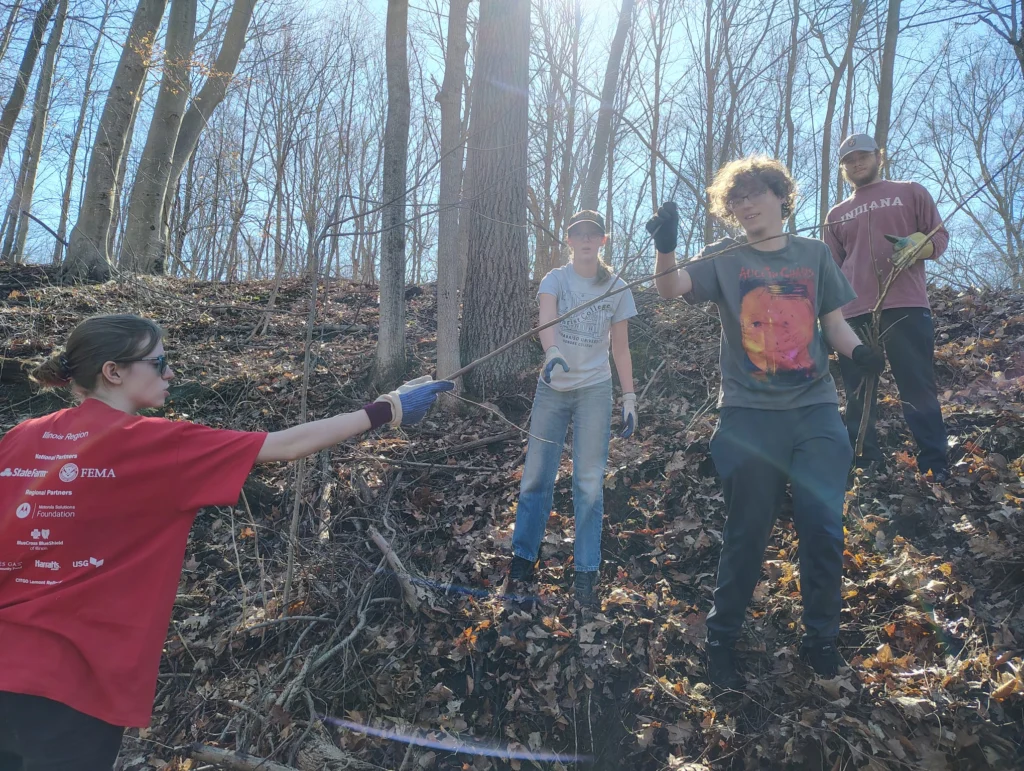
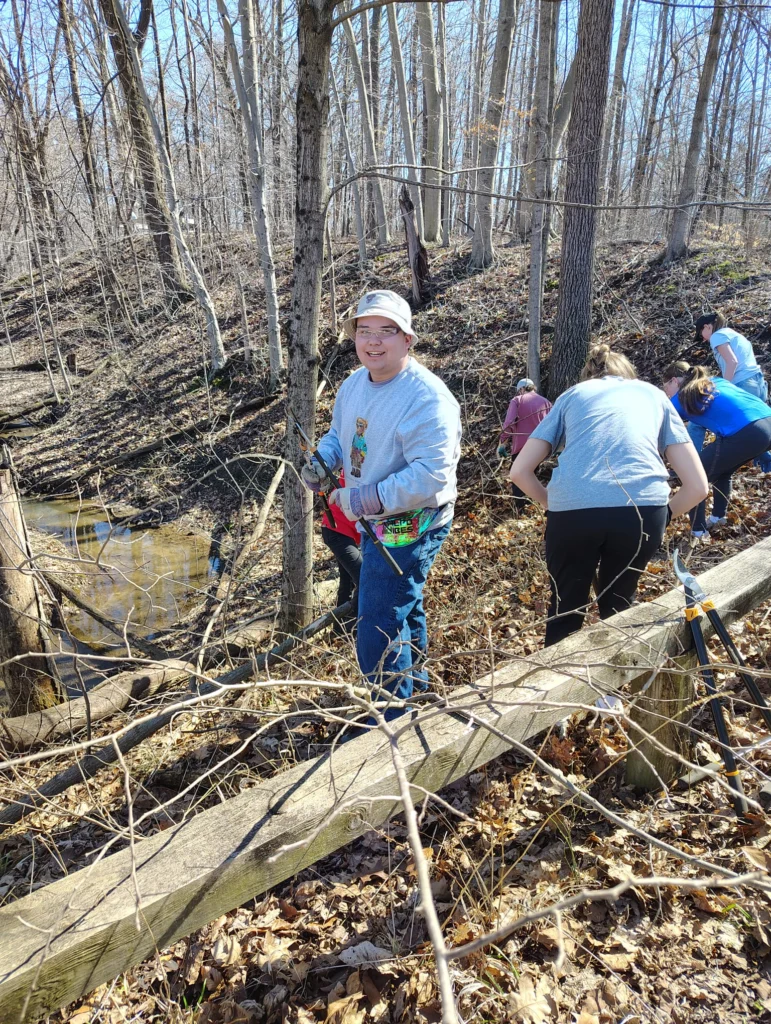
After Billie departed, we learned more about Shirley Heinz. We took a hike before we started working, learning more about the land itself. Even though spring was just starting, and nothing was grown yet, it was still a beautiful place. We were taught what to look for for signs of spring, even seeing Sandhill Cranes, which the Potawatomi use as a sign spring is coming. The group went on to go onto the land, to clear out spaces for water testing to happen. The 10 of us worked together and very effectively, getting each spot done faster than the Shirley Heinz’s team was ready for. Having spare time, we got to go take down invasive plants, one we learned about at the Dunes, bittersweet, a plant that grows around another to choke the life out of it. The group learned a lot about nature these days, and the Indigenous history of the area.
Hailey Morse
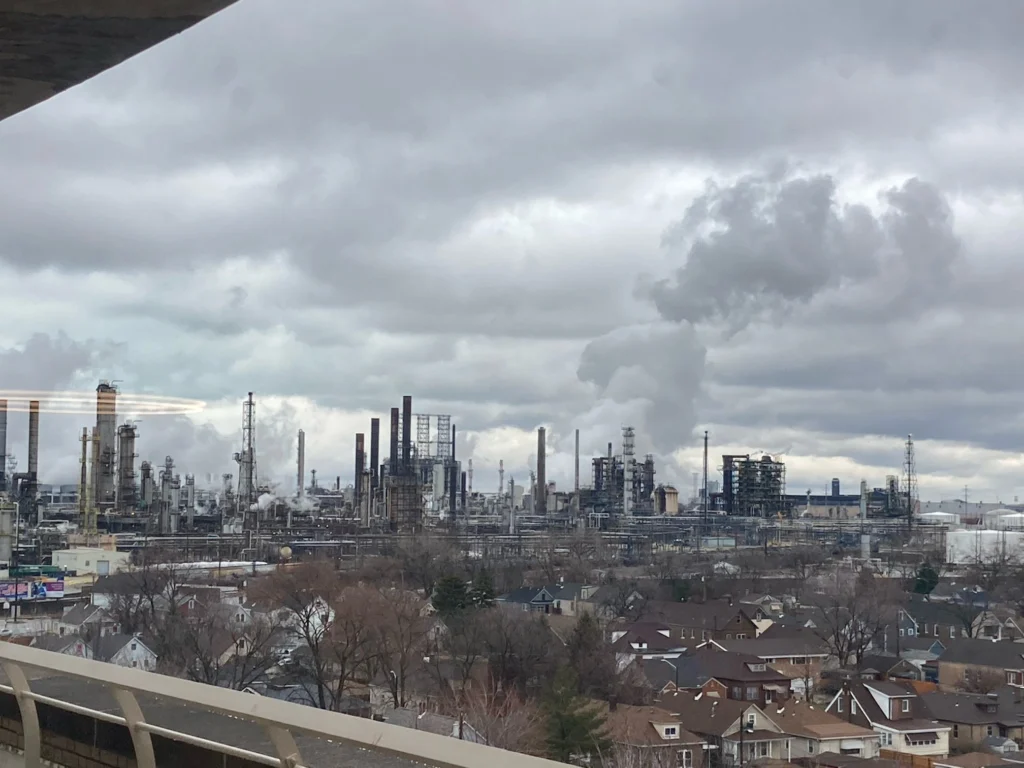
One day of our trip, we were accompanied by Valpo Professor Chris Iceman to install air quality sensors in Gary and Whiting. As someone who is not from the area, I had heard a lot of things about the industry and crime in these places and had come to a conclusion that these were bad places to be. Throughout my time at Valpo, especially doing service in this community, I have learned that this is not necessarily the case. Our first stop on the trip that day was Gary City Hall where all of the people were incredibly kind and interested in what we, and Professor Iceman, were doing. We were given the opportunity to go up on the roof, where we had originally intended to install a sensor. While we were up there we could clearly see the steel mills on the other side of the railroad tracks. But at our feet was a rooftop garden and people eager to help their community breathe better. In Whiting, we were invited to Calumet College of St. Joseph, a school much smaller than Valpo but filled with community. We were installing another air quality sensor on their roof which really put Northwest Indiana into perspective for me. On one side of the roof, you saw the BP Refinery, standing tall with smokestacks and rich with history. While we waited for the sensor to get a WiFi signal, we were told a story about an explosion that happened in the 50s at the refinery that CCSJ’s Vice President of Institutional Advancement Brian Lowry’s grandmother lived through. On the other side of the roof, you could just make out (it was a rainy day) the Chicago Skyline and the lakeshore. Without the Gary steel mills and the BP refinery in Whiting, Chicago could never be the bustling and important city that it is today.
Nick Greiner
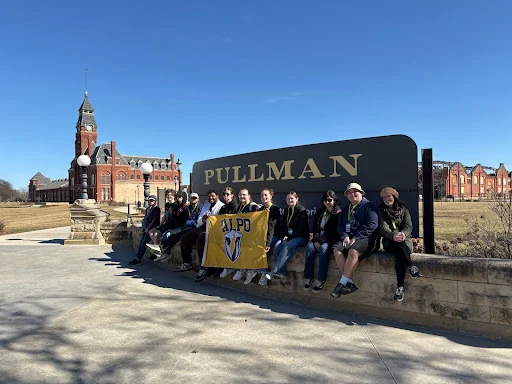
One of our first service trip opportunities to come up was a visit to the Pullman National Monument in Chicago. There we learned about the history of the Pullman company and the many laborers that ultimately made up the company town of Pullman. Pullman was a much nicer company town then many other similar towns at the time, which is thanks to Pullman actually having some care about listening to the needs of his employees. This town was far from perfect however. The more skilled laborers and managers lived much closer to the factory and had the nicest homes out of the entire town. There was a very clear division between the top and bottom employees that stretched beyond pay. This division is what will ultimately lead to labor stoppages and strikes as lower level employees fight for higher wages and respect from the top level of the company. The important take away from Pullman is the need for solidarity across all workers in order to achieve advancement in conditions. NWI is very well known for the steel and oil products that it produces. However the history of company towns and unions that are involved in the production of those products is equally important to the products themselves. These products come from the labor of the unions that had to fight to earn fair wages for their work. These issues are still ongoing till this very day. In the background of this service trip, workers at the BP refinery in Whiting were negotiating a labor contract with BP. As of right now, BP has locked out 800+ workers and has even begun to bring in replacement workers,“scabs.” Unions and company towns have a long history in our region and it is important to recognize the struggles of Unions and the workers that provide us with vital products we use in our daily lives.
Esai Hernandez
During our Service Trip, we walked around Pullman National Monument while learning about the history of the Pullman Company. From the moment we started our tour with the park ranger we were immersed into the feeling of being in a Pullman train car. Soon enough we were passing around the blankets they used to sleep on the trains and picking a job by random. When we looked at our jobs we paired up with others in our part of the workforce and talked about the Pullman Porters and other important workers in the Pullman Company. We talked about the environment of living in a company town not just environmentally but socially. I thought it was interesting that the main message was about Pullman and the workers and not necessarily the people on the Pullman train cars. That prompted me to ask if the Black guests were affected by the racial discrimination going on at the time. We then talked about the racial challenges going on with the railroads as Pullman allowed anyone to ride on his company’s trains but the railroad companies usually had stricter, more segregated rules.
Lauren Wroza
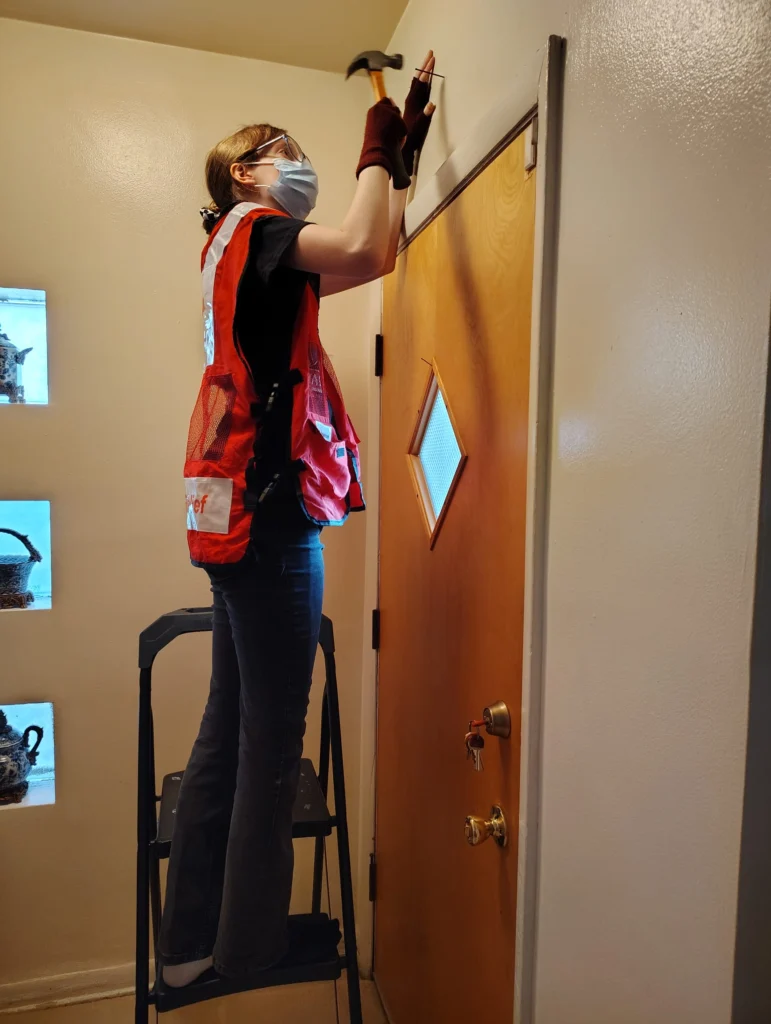
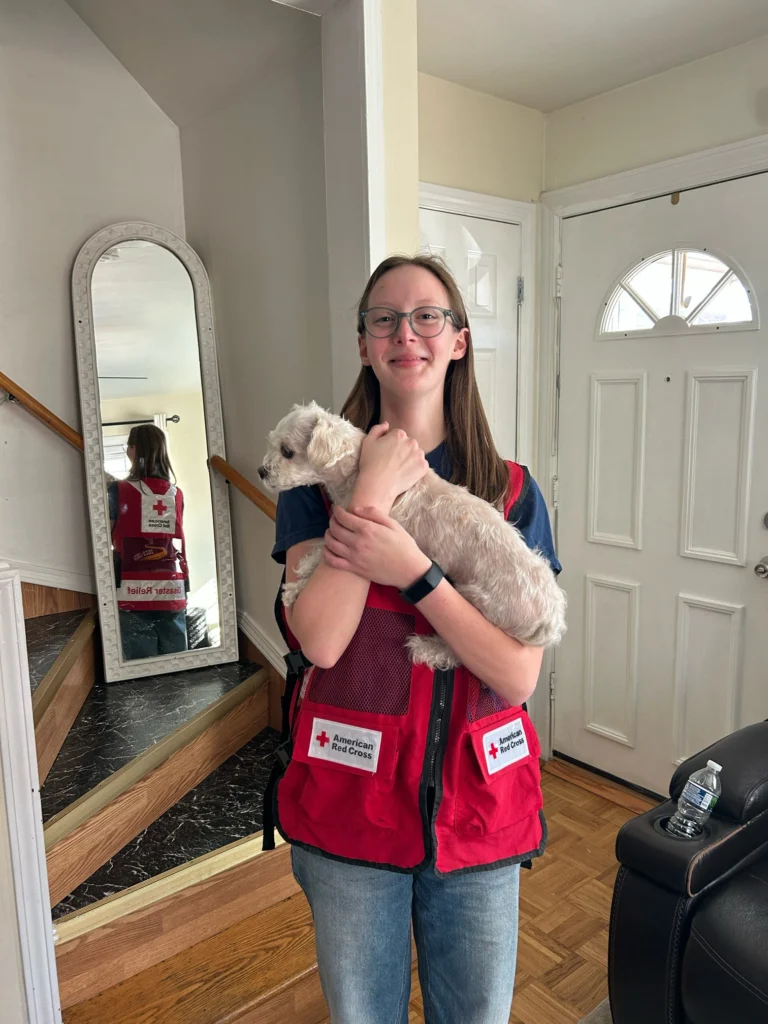
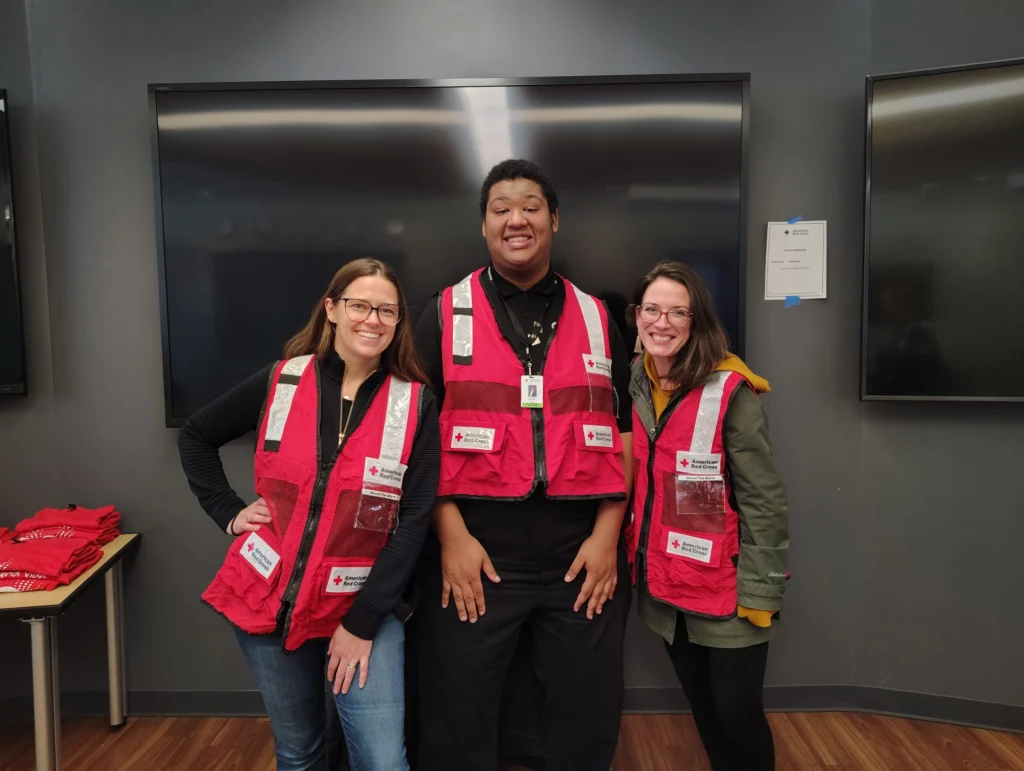
After our history lesson at Pullman National Historical Park, we traveled to the Greater Chicago Chapter of the American Red Cross. We got to join their Sound the Alarm event to install smoke detectors in homes across the Chicago area, while creating positive connections with the homeowners and their families. Many of these sites sent us back to areas similar to Pullman, and we were able to learn more about the history of the communities through the lenses of current residents. Historical disinvestment, similar to what was seen in both Pullman and Gary’s industry towns, has created limited job opportunities, poor infrastructure and underfunded schools in communities around Chicago and into northwest Indiana. Beyond that, the residue of systemic and discriminatory practices such as redlining, has created a legacy of segregation, wealth gaps, and concentrated poverty. These policies created in the early 20th century consisted of the federal government and banks marking minority neighborhoods as “risky”, barring access to mortgages and investments, while specific legal clauses prohibited black people from buying or renting homes. The communities that we had the privilege of stepping into and serving, exemplify much of the effects of current and former policies working against many black and minority communities. Yet, more than that, they show the strength of resilience, care, and love that carries a community through systems set up against them.
Nathalia Lenz Prochnow
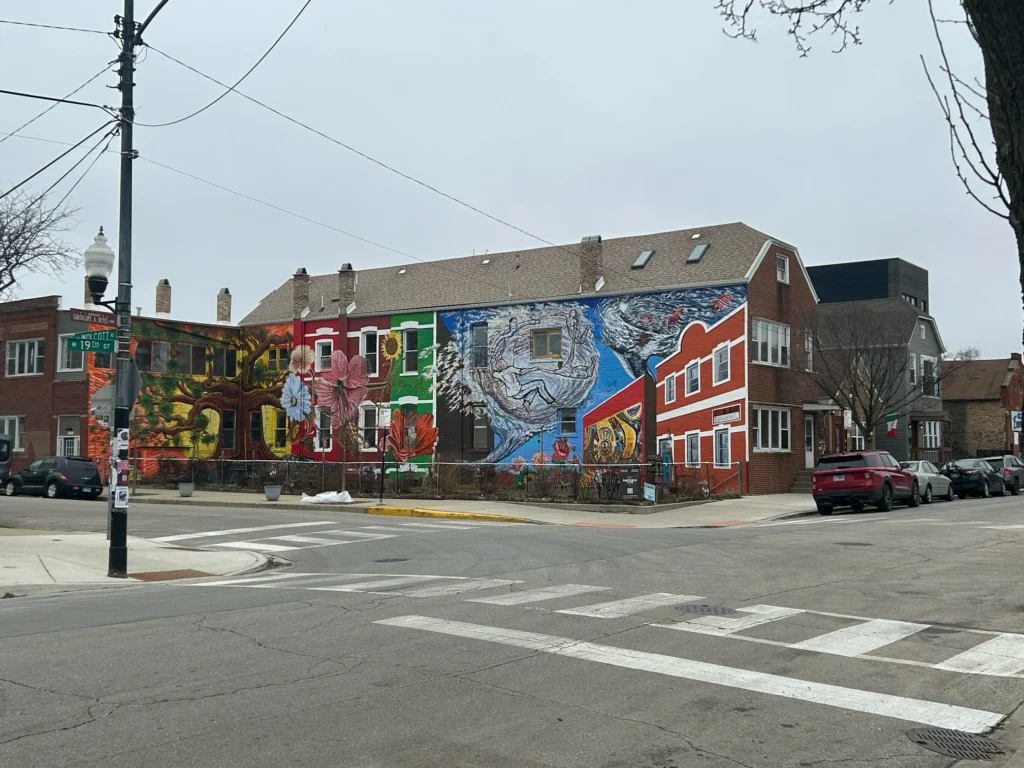
Going to the National Museum of Mexican Art in Pilsen, Chicago, was really inspirational; we got to learn about the history of the Mexicans that traveled in order to find a new life in the United States. We also saw two incredible exhibitions: one about Mexican native culture and one about how politics can be expressed in art and how it influences our perspectives. We also got to visit La Villita Park, which was a really cool example of solving a problem in the neighborhood where people really didn’t have many options for recreation. In that park we found different warnings about how to interact with the Immigration and Customs Enforcement (ICE) agents in the area. Little Village is a majority Latino community and it’s really interesting to see how many different ways the community comes together to protect their residents. After that, we went to the Unity Lutheran Church, a place of acceptance for those who for many years could not find a church to be accepted in and to worship God. Rvda. Reverend Maria taught us that her ministry is somewhere where people can be authentic and everyone is welcome. She showed us a community that is resilient, strong, and full of love for God. We were able to share resources with the food pantry there to support vulnerable families.
Eleanor Sun
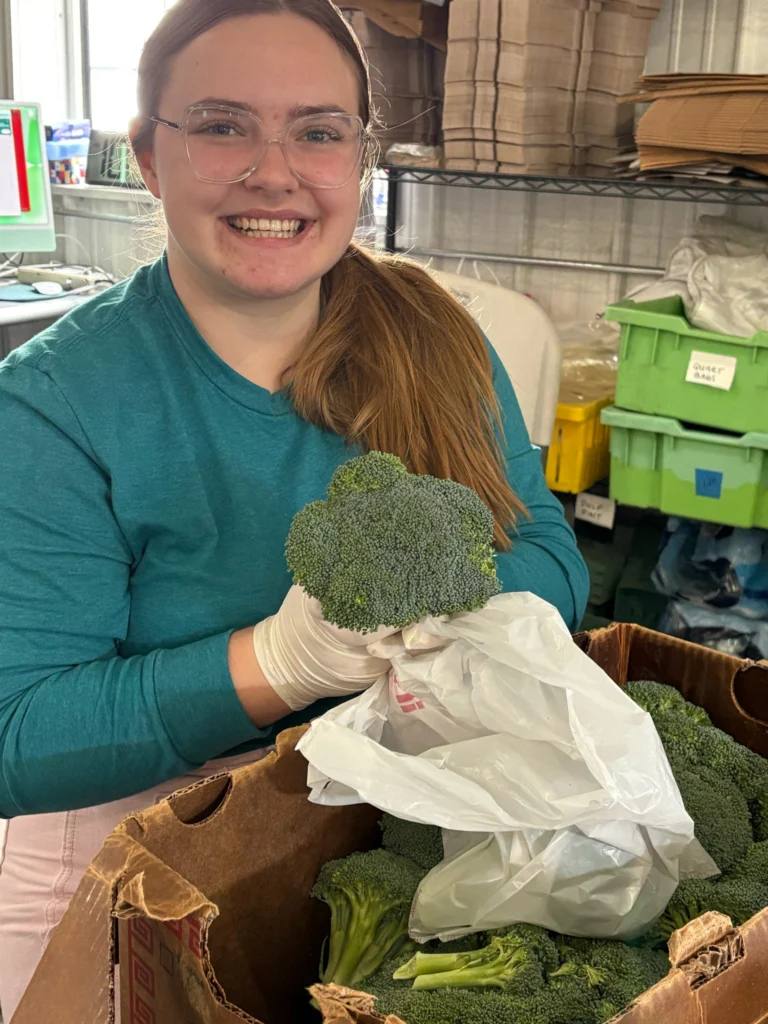
During our service trip, we participated in two different food scarcity activities, both of which opened my eyes to the pressing issue of food insecurity. The first activity was about food stamps. We were each given five dollars to purchase a meal for both dinner and breakfast. Although we approached it as a group, some people who face insecurity don’t have that luxury. A bag of chicken nuggets at the Aldi in Chesterton costs more than five dollars. A cheeseburger meal at McDonald’s in Valparaiso costs more than ten dollars. An individual would not even be able to afford such food. Not to mention they still need to save money for breakfast the next day. Additionally, with the low amount of money provided for individuals and families who face food insecurity, it becomes difficult to access nutritious food. It costs about $2.50 for a crown of broccoli at Aldi. That’s half of the budget already gone just for a vegetable.
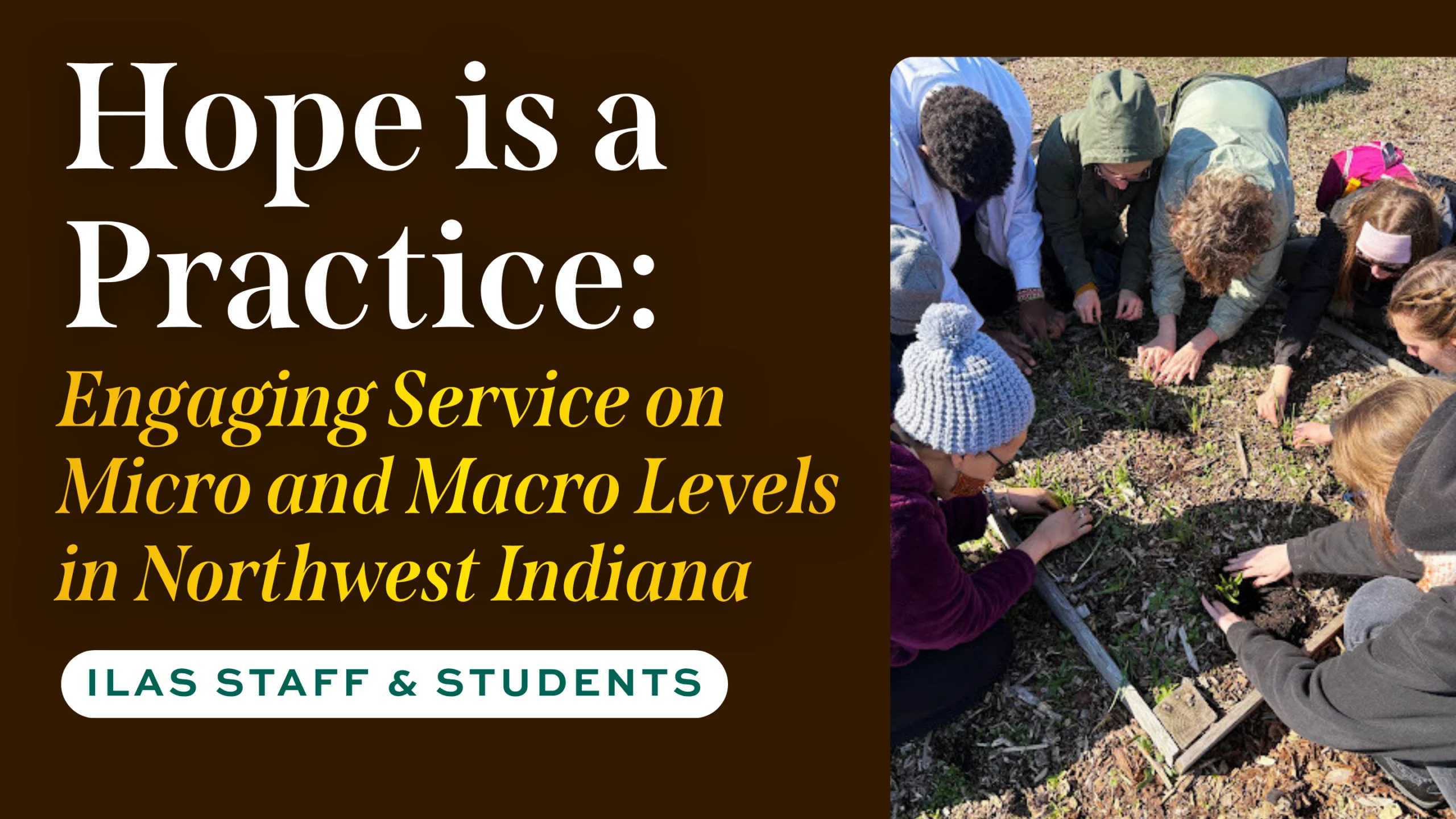
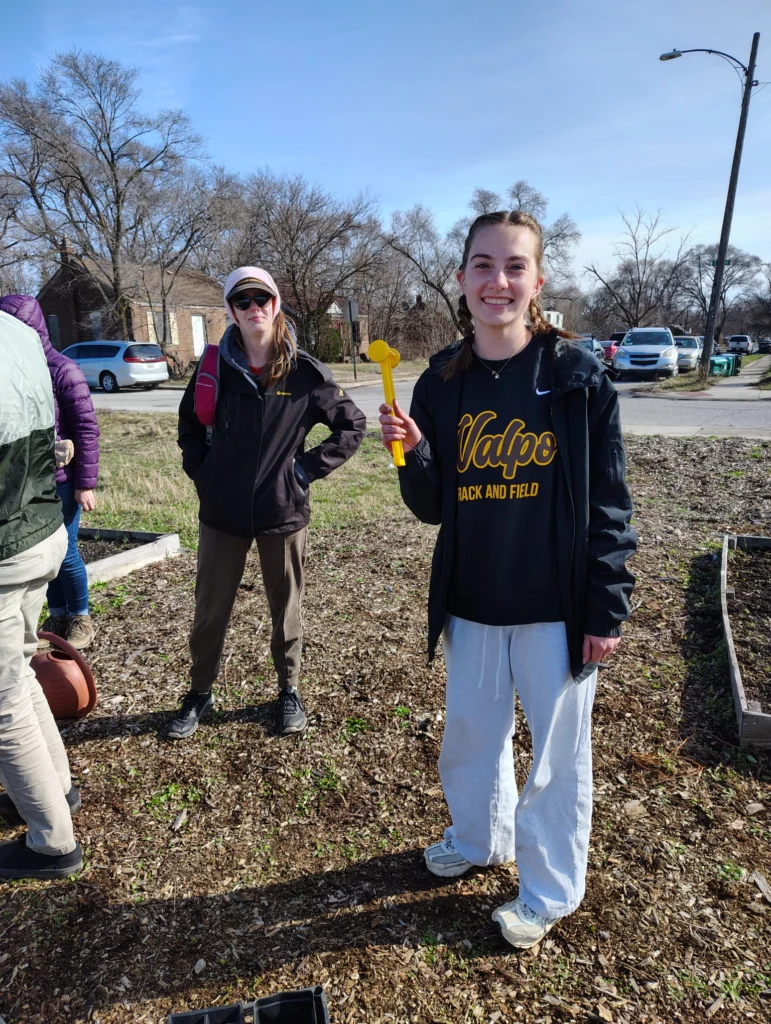
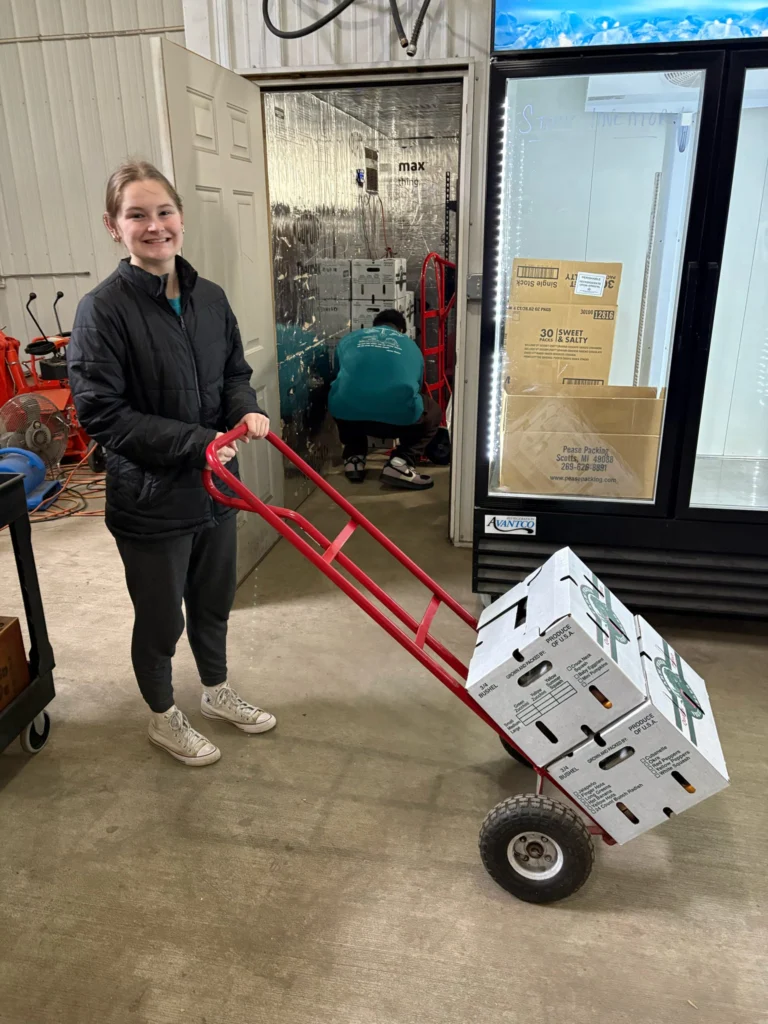
During the second activity, we worked with the NWI Food Council to pack boxes for the FarmHer to Mama program. The program connects women farmers to new mothers to help them create nutritious meals for their families. The boxes included eggs, cheese, mushrooms, sweet potatoes, mixed greens, carrots, and broccoli. This program is a great step towards providing security for women who are already struggling. However, funding is a major concern for such programs as they can only afford to provide food for mothers until their child turns two. It is extremely difficult for those facing food insecurity to obtain nutritious meals. We also were able to work with Libré Booker of Living Green Garden to plant garlic and greens in the NWI area. This helps provide nutritious food in a more affordable and sustainable way. These efforts are just small steps and although they are instantaneous, they only provide short-term solutions to long term issues.
Jack Hull
Throughout our service trip, we were lucky to engage with many different service organizations of various sizes and structures. On our first day we were lucky to have the chance to learn more about the Indiana Dunes from the Indiana Dunes Learning Center, an organization dedicated to teaching about the local environment to the public. Here is where we first encountered a symbiotic relationship between two organizations. The Indiana Dunes as a National Park is dedicated to not only the preservation of the natural environment but also the education of it to the public. Yet, they were able to form a relationship with the Learning Center to help further that mission. This is the first type of nonprofit structure we found: a dual approach, where two organizations share talent and resources to carry out their mission.
We also saw this with the Shirley Hines Land Trust and Jibek Mbwakawen, which blended environmental conservatism with understanding the history of the land and first peoples, and The Northwest Indiana Food Council works to connect new mothers with local produce from women farmers. This type of nonprofit collaborative structure allows for these organizations to share resources and talent, but also deliver a more meaningful product. I noticed that the volunteers walked away with a deeper appreciation for the service that was done, but also saw the impact of people coming together.
Opposite to the combination of two nonprofits on a shared mission, are a single large nonprofits carrying out many goals. The American Red Cross has five main missions: providing disaster relief, supplying lifesaving blood, supporting military families, offering health and safety training, and conducting international aid. The American Red Cross is a national organization that has a large volume of time, money, and talent. So they are able to carry out larger goals compared to small localized ones. Often, these larger organizations are a great first safety net for the communities they serve. With a larger pool of volunteers and money they are able to have larger initiatives. For our service trip, we got to install fire alarms across the Chicago region.
Overall, this trip showed me that there isn’t just one “right” way for nonprofits to make a difference. Some organizations have a bigger impact by working together and sharing resources, while others are able to do a lot on their own because of their size and reach. Seeing both of these in action helped me understand how important collaboration and structure are in service work. It also made the experience feel more meaningful, because it wasn’t just about what we were doing, but how different people and groups were coming together to make it happen. I’m leaving this trip with a better appreciation for the different ways people serve their communities and how working together can create a bigger impact than working alone.
This trip taught us at ILAS more about our own work of listening for purpose. Reichel’s powerful reflection concludes with a series of questions, and a call to purpose:
“Which relationships give your actions meaning?
What would you keep doing even if there was no hope for success or improvement?
What commitments are worth embodying even when no one else embodies them?
Find your purpose. You don’t have to end world hunger or achieve global peace; a purpose only has to be slightly bigger than yourself.
Purpose sends you back to that sense of awe in front of something greater than yourself. It gives you focus. Purpose grounds, inspires, energizes. It lets you appreciate your own effort and the effort of others. Purpose connects you with those around you: It will lead you to other people, movements and institutions, histories and futures that you can participate in.” [32-33]
– The Institute for Leadership and Service Staff and Students