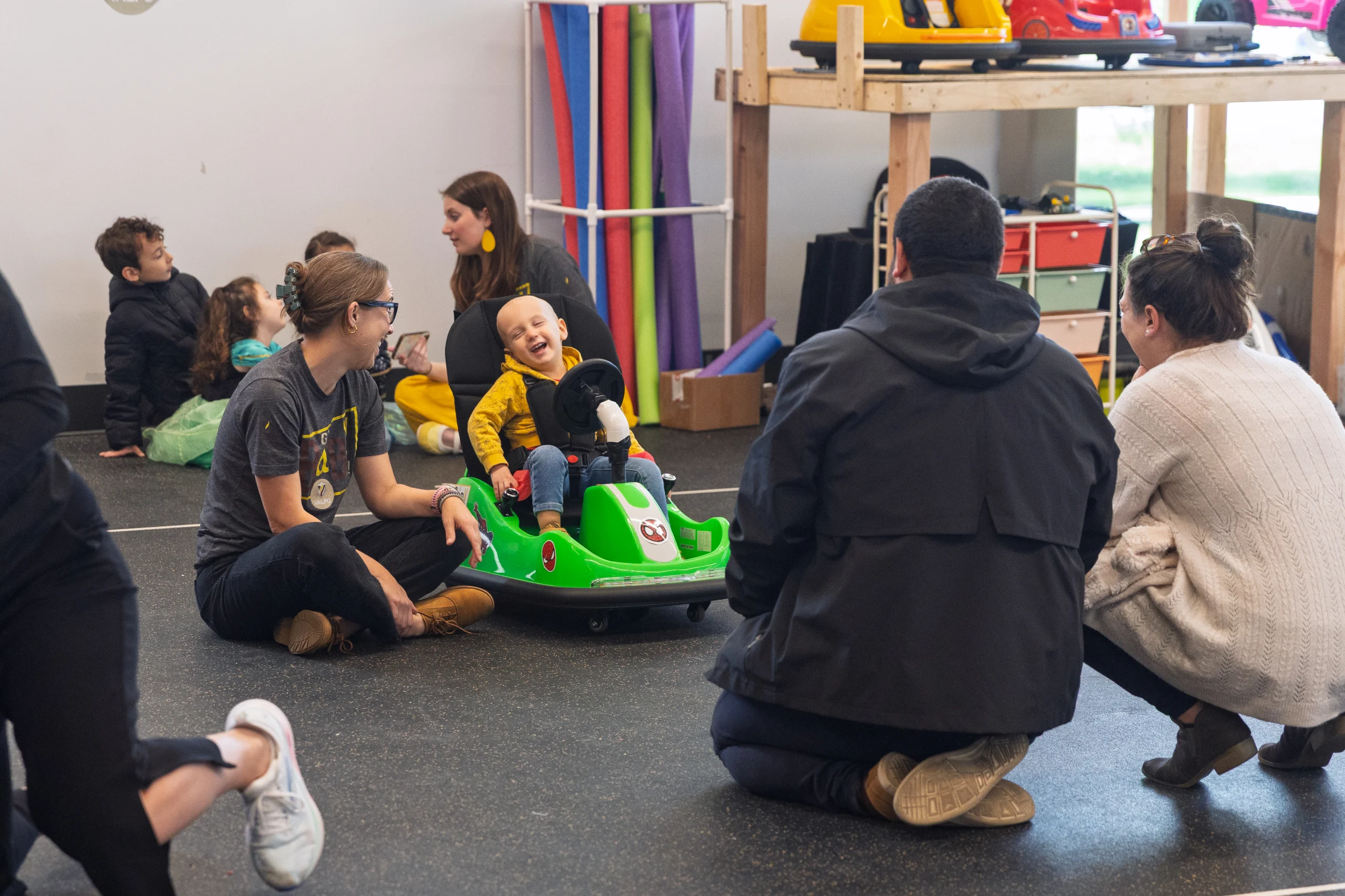
GoBabyGo launched at Valparaiso University in early 2024 with the goal of helping children with disabilities gain the ability to navigate their surroundings and explore the world around them. The project began as a spark of hope at the University of Delaware and has since grown into a worldwide movement of compassion and innovation. Its mission is simple yet profound: to enhance mobility and improve the quality of life for children who face challenges in their early developmental years. Through this project, children can access solutions that empower them to explore their world with newfound freedom and joy.
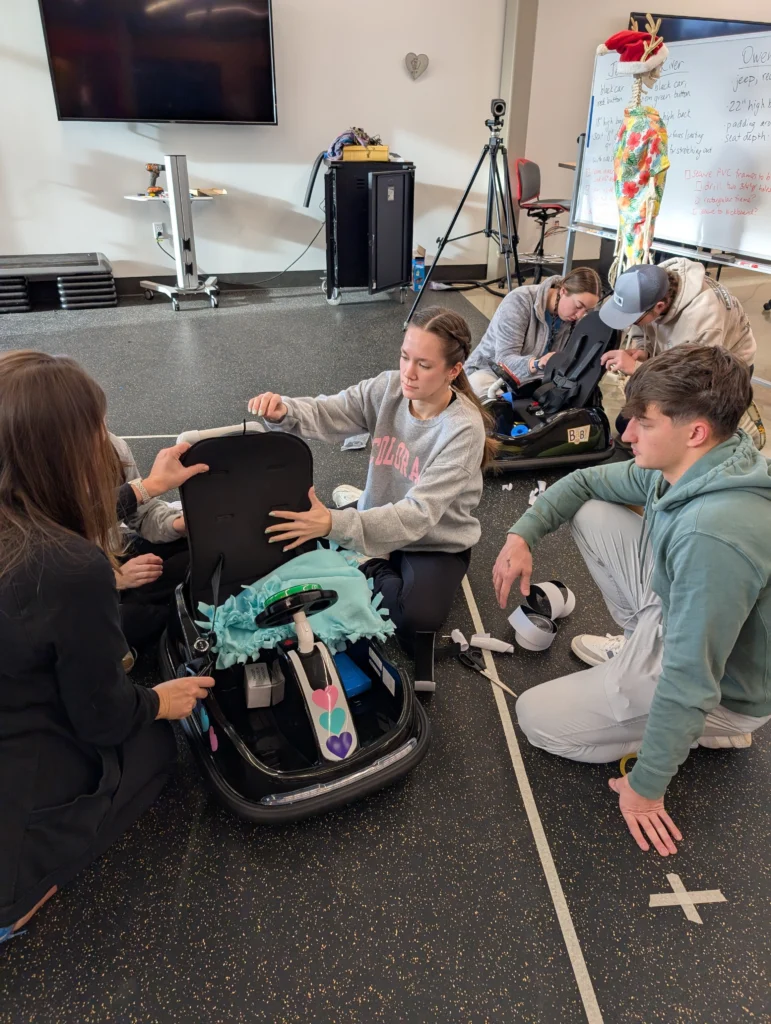
The heart of this initiative lies in modifying ride-on cars for children with disabilities, enabling them to experience the independence and delight that mobility brings. This idea has resonated with countless individuals and organizations, inspiring them to launch their own programs to build ride-on cars for children in their communities.
In an extraordinary gesture of generosity and vision, the University of Delaware has ensured that the GoBabyGo mission can thrive wherever needed. By voluntarily releasing any trademark rights to the GoBabyGo name and placing it in the public domain, they have removed barriers for others to carry this work forward. This selfless act reflects a deep commitment to inclusivity, ensuring no child is left behind in pursuing joy, mobility, and possibility.
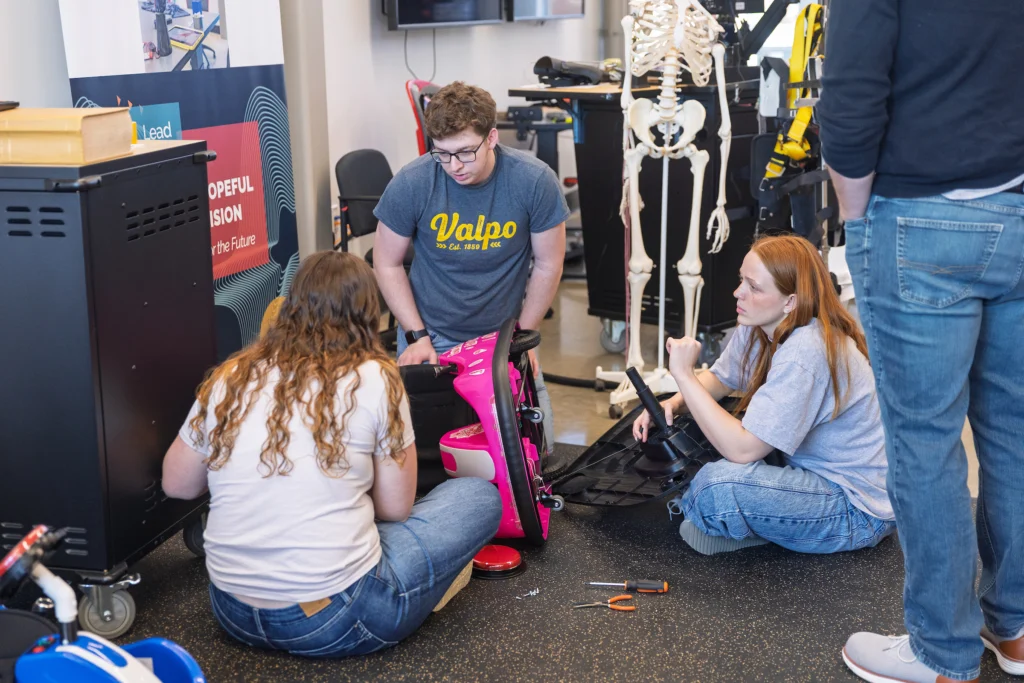
At Valpo, the GoBabyGo program is a joint effort of the occupational therapy and bioengineering programs. Dr. Theresa Carroll, clinical associate professor of occupational therapy, and Dr. Reva Johnson ‘09, associate professor of mechanical engineering and bioengineering, share a true passion for GoBabyGo and the collaborative learning environment it inspires. Johnson says, “Theresa has all the clinical expertise and connections that enable us to do everything in-house. It is so fun to have these kids in our bioengineering lab and to have Theresa’s occupational therapy students talking and getting to know my bioengineers, mechanical engineers, electrical engineers, and computer engineers.” She adds, “Theresa and I really love working together and with our students.”
Since its inception at Valpo, the program has already provided seven families with mobility cars customized specifically for their children and is working with three additional families this semester. Carroll says, “Mobility is a human right. Everyone should have the right to move within their environment. With mobility, one of the things kids learn is that they have control over their lives and can go somewhere. We want them to learn at a young age the self-empowerment and self-determination that comes with being mobile. Kids learn visual skills, how to coordinate their bodies for movement, social skills, and so much more.” She adds, “When we see a child that cannot move at all due to a disability, we worry not only that they can’t move but that their limited mobility could now potentially impact all of these important skills even if they’re very, very young.”
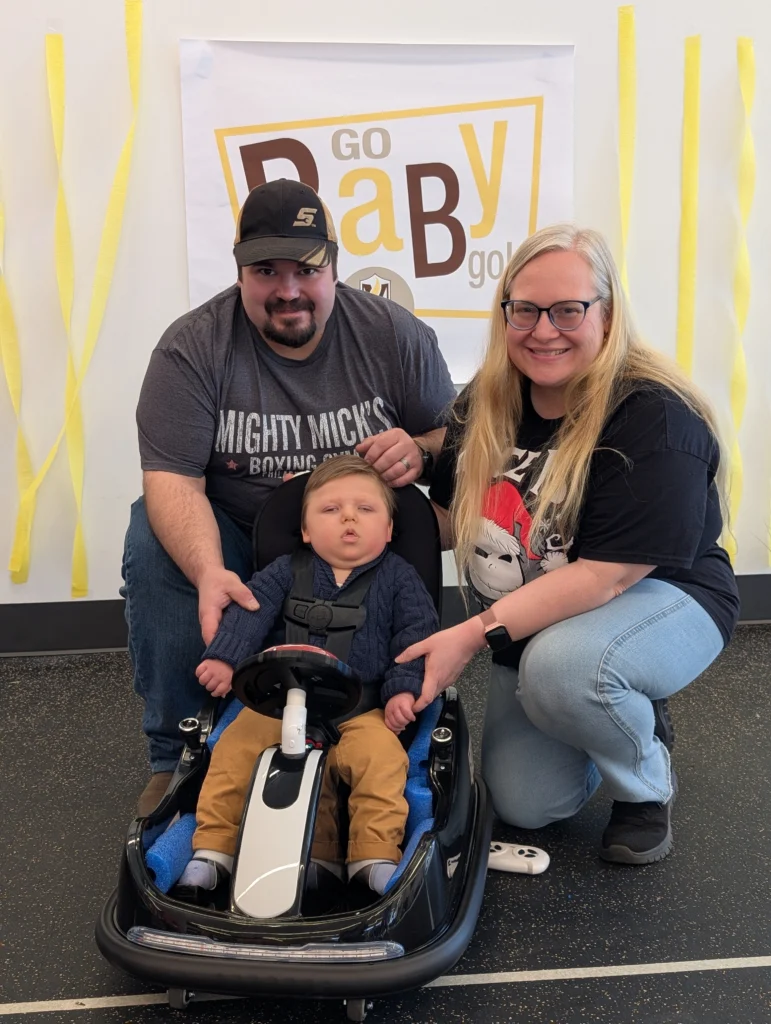
Candace Benjamin ‘03 Archer explains the impact a GoBabyGo car will have on her son, Jesse, “My son was born with 22q11.2 deletion syndrome, which caused him to be born with a heart defect. He had a stroke after his first heart surgery, which put him further behind developmentally than he was originally.” She adds, “With this program, we will have another resource to help him progress and catch up with his peers. We look forward to Jesse becoming more mobile and independent with his car, which will also help him with reaching, a skill we are currently working on. As a Valparaiso University alumni, I am so thrilled this program exists.”
Additionally, many parents have reported that insurance companies will only approve a powered mobility device if they can prove that the child can safely operate one. With a GoBabyGo car, these same families can gather the evidence they need to get a powered wheelchair for their child in the future.
Valpo students are also learning the profound impact of their work in a way they never imagined. Bioengineering major Quinn Brothers ‘25 says, “Being involved in GoBabyGo has reaffirmed my desire to pursue a career where I work with people directly, merging innovations with human impact. I would love to work in assistive technologies or sports to make play safer. This has shown me the importance of designing with empathy and working directly with the end users to solve challenges that arise.” She adds, “My involvement with this program has been one of the most rewarding parts of my time at Valpo. Strengthening my hands-on engineering and collaboration skills has been very valuable to me. However, it has been more valuable to see the impact that we have made on these families, providing their children with greater mobility and independence.”
Professor Johnson emphasizes, “Our program ties together different disciplines in a real-world, high-impact way. For occupational therapy and engineering students to work together for a kid they see in front of them is incredibly motivating and challenging. Engineers, in particular, need to think about the humans using the technology we are designing and building. We talk about this a lot at the College of Engineering. Helping students understand that engineering is human-centered is such an incredibly valuable experience.” She adds, “One of the things that I love about Valpo is that we treat people as whole humans. This is a way for our engineers to do that with their technical skills. Seeing this child, who is a whole human being, to see what makes them light up, what they’re excited about, and then to design those things into the car in their home is a really powerful project for them to work on.”
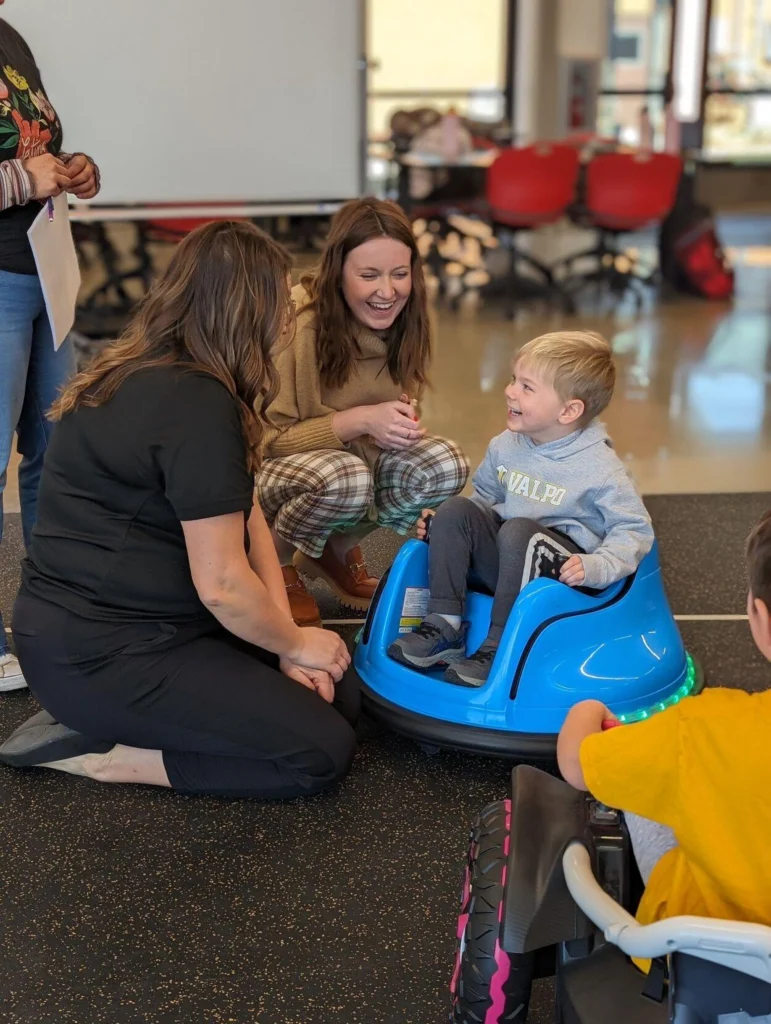
Carroll echoes this same sentiment, adding, “I think the most impactful thing is to have students be able to learn from real people. In occupational therapy, we talk a lot about treating the whole person. Not just the person and their skills but also how the environment, the tasks they’re engaging in, and the supports they have impact their participation in life. These are all incredibly important factors. I think students often think that when we do an evaluation, the most important part is trying to measure and physically assess the child. Still, really, the most important part is the beginning when we ask the parents to tell us their story.” She continues, “These parents have such impactful stories about how their children were born and diagnosed, what they had to go through, and what their everyday lives are like. Hearing about their lives and trying to think about how a vehicle could improve their lives is important for our students to learn. Needs are different for every family.”
Johnson emphasizes the importance of storytelling, saying, “These stories are such a rich way to understand the kid’s motivation and the family’s motivation. To be in this liberal arts environment at Valpo and to have our colleagues around us who specialize in stories, history, and the rich context of culture and people matter so much for engineering. The GoBabyGo project makes it clear that motivation affects the usefulness of technology in a huge way.” She adds, “Our engineers are saying that it will affect this child’s brain development if we can tap into their intrinsic motivation, the songs they like, and the colors they can see best. It is such a powerful use of story to design better technology.”
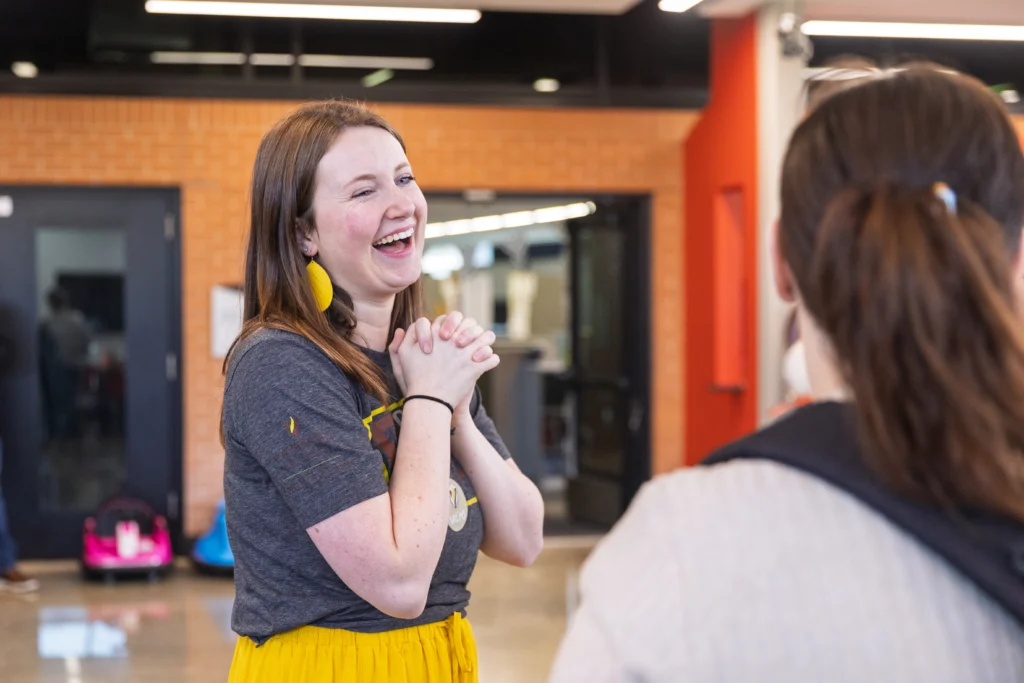
The mission of the GoBabyGo program has always been to keep costs as low as possible to help as many families as possible at no cost to them. This requires a bit of creativity, a ton of resourcefulness, and, of course, funding. Professor Carroll explains, “The deans of the College of Engineering and the College of Nursing and Health Professions have been incredibly supportive of the program by allowing us the time and resources to commit to it. The most expensive part of the vehicle is the vehicle itself. Fortunately, they are not as costly as they once were because we use commercially available materials that are easy to find. We use things like swim kickboards, PVC pipe, and Velcro to make modifications. We’re trying to figure out how to do this at a low cost while still being safe and effective.” She adds, “We are also trying to keep these units customized to the child, which limits our capacity in terms of time and funds. It’s heartbreaking to have more applicants than we can make cars for.”
Another significant impact of programs like GoBabyGo is the additional light that shines on disability awareness in our communities. Johnson explains, “Unfortunately, our families sometimes encounter negative attitudes or stigma. I hope that by sharing this story, we can also help promote positive attitudes, support, and encouragement for families and children with disabilities. They belong in the community and have a right and a need to do what other typically developing kids do. It would be great to see the Valpo community, including current students, faculty, and alumni, as a source of support and encouragement for these families.”
To lend your support to the incredible work happening with GoBabyGo at Valpo, please visit give.valpo.edu.