


In the summer of 2026, a blind Guatemalan amputee in her late eighties travelled six hours by bus with no wheelchair or caregiver to be seen at a Faith In Practice clinic. Volunteering at the clinic that day was Elizabeth Gmitter, Ph.D, dean of Valparaiso University’s College of Nursing and Health Professions – an experience that she would later say, “broke my heart wide open.”
As a 50th birthday gift to herself, Dean Gmitter decided to volunteer for a mission trip with Faith In Practice, an organization she heard about from a friend who travelled with the group a few years prior. The non-profit organization, based out of Houston, Texas, sends more than 2,500 volunteers each year to Guatemala to provide healthcare to underserved communities. Upon returning from her trip, Dean Gmitter’s friend Sarah told her of the need for physical therapists on the mission trip. “Sarah was so passionate about the time she spent as an interpreter with Faith in Practice, and I just loved her story. She knew I was a physical therapist and told me about the need for more therapists on the trip, so I told her to nudge me if there was still a need when she travelled with them again.” Dean Gmitter explains, “Sure enough, there was still a need, so I started the process to get involved.”
Dean Gmitter left Chicago and travelled to Guatemala City, where she took a 4-hour bus ride to the area she would be serving. The bus trip served as good bonding time for the 48 volunteers from across the country who were also donating their time and skills. Upon arrival, the group headed straight to the hospital to get a grasp on their new surroundings. On the first day, Dean Gmitter and the other volunteers began building wheelchairs and preparing for the clinic’s opening. Guatemalan patients who were scheduled for surgeries during this time were also there for their pre-op screenings, and a blessing was provided over the volunteer team and the patients. Dean Gmitter says, “The first day was very powerful. The blessing moved me to tears. Many of the patients we were seeing were crying because they had been dealing with their conditions for so long and now they were finally going to get the healthcare they needed.”
The Faith In Practice volunteers saw approximately 30 patients each day between just three physical and occupational therapists. Doctors would evaluate each patient before sending them over to the physical therapy team, who would determine their needs. For the most part, patients were in need of wheelchairs or other mobility devices. At the end of each day, the volunteers would return to their hotel to have dinner together, and each morning they would begin the day with a reflection on the day before. Dean Gmitter explains, “The days were exhausting in the best possible way. The hospital was nothing like we would experience here in the United States. There was no air conditioning, the hospital was gated off with barbed wire, and our bus had to be escorted to and from by police.” She adds, “There was so much to be aware of in Guatemala, like not being able to drink or brush your teeth with the water, and being sure not to open your mouth in the shower.”
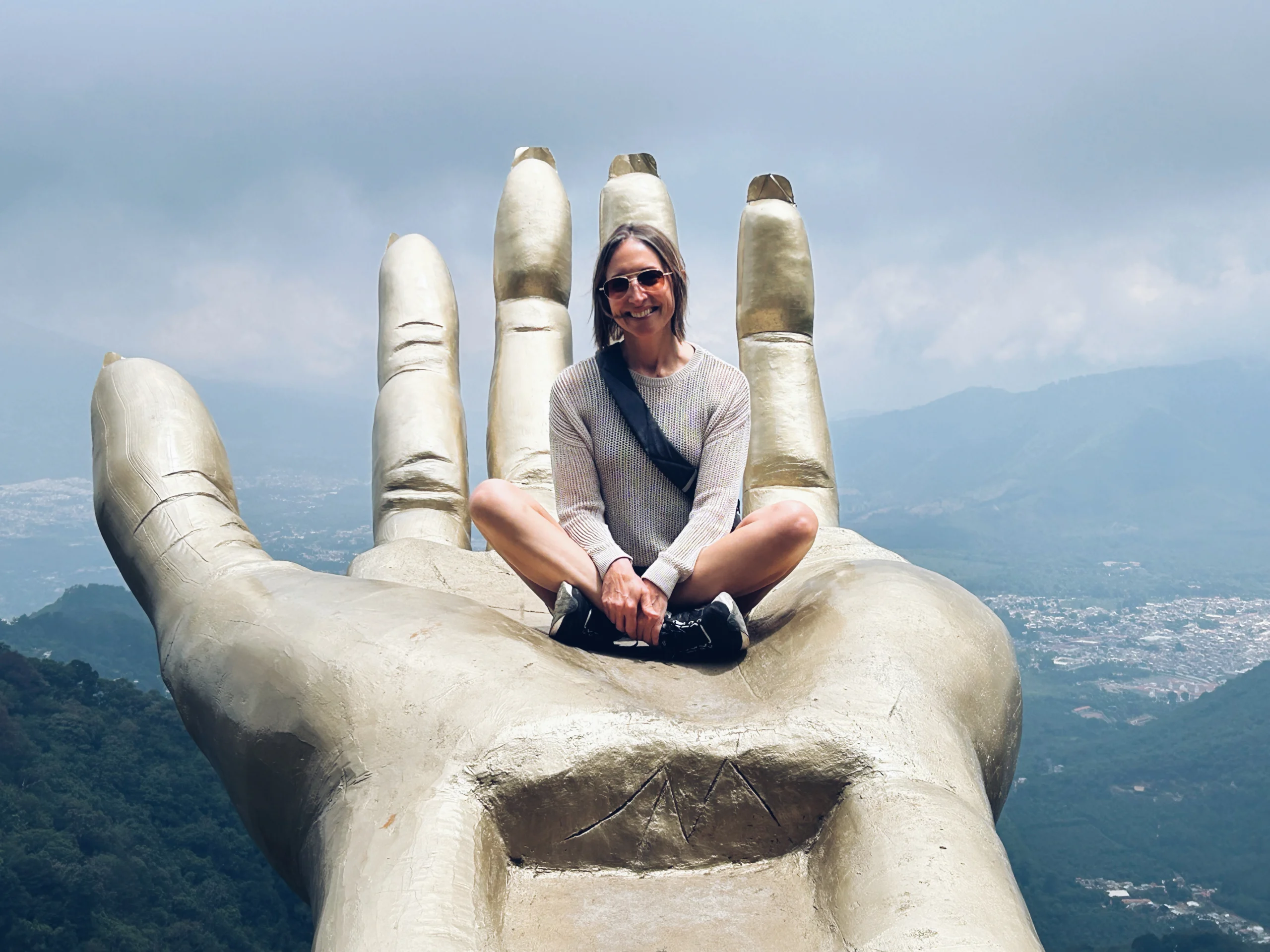
The mission lasted eight days, with the last day being a stop in the city of Antigua, for the volunteers to explore and rejuvenate before their trip home. During her trip, Dean Gmitter chronicled some of the profound details of her experiences via social media. She shared about the woman who travelled from six hours away. “I was blown away by how far she had come, and how challenging it must have been for her to navigate such a distance as a blind amputee.” She continues, “I asked her how she got to the clinic, and she explained that her community, her neighbors, got her on the bus, and the volunteers got her off the bus when she arrived. It’s such a communal culture; they all look out for each other. It was so powerful to witness.”
When it was time for the woman to return home, her gratitude was overflowing. She asked if she could bless those who had helped her before she returned to the bus. Though Dean Gmitter speaks limited Spanish, she could feel the depth of gratitude in the woman’s words. “Mobility devices like canes, crutches, wheelchairs, and walkers are readily available in America.” She says, “This woman came from six hours away, waited a lot of time, had a six-hour ride back on a bus that is not comfortable for someone in her condition, yet her gratitude was tremendous.”
The experiences she had with Faith In Practice solidified the importance of the entire healthcare ecosystem for Dean Gmitter. She says, “It’s easy to think that a surgeon or doctor would be the most important person on the team, but without the wheelchair assemblers who were cranking out wheelchairs, or the interpreters who were helping us communicate with our patients, we would not have been able to serve them as well as we did.” Additionally, the trip served as a reminder of how the simplest of things often make the biggest difference for a patient. Dean Gmitter explains, “Fitting and training on assistive devices are often a very basic part of therapy for a provider. It’s not overly complicated to learn or execute, yet it enables patients to be able to move around and go out and become a part of their communities again. For so many, they just wanted to go to church, and now they can.”
Elizabeth Gmitter’s involvement with Faith In Practice had an immediate impact on how she approaches her career as a healthcare provider and dean. “Modeling is so important. Our students are still in their ‘becoming,’ and one of my favorite parts of my job is watching them become who they are. They’re developing their personal identities, and then they come to us and begin developing a professional identity.” She says, “I think modeling leadership, community, belonging, service, and compassion are some of Valpo’s greatest strengths. That’s what makes us distinctive. My experience in my first year at Valpo is that it’s not just one or two people modeling those values; it’s the whole of Valpo. I hope that modeling those qualities for our students and for one another has a powerful impact.” She adds, “Empathy continues to build over a lifetime. You never arrive completely at how deep and how wide your compassion and empathy for others can grow.”