
Resources for Teachers

Resources for Teachers
Engineering Units by Grade Level
Kindergarten

Problem: The sun makes the surface very hot when no shade is provided. Students will design and build a shelter prototype to protect an item from the sun.
Objectives: Students will be able to explain the effects of the sun (hot, helpful, harmful, etc.) and how we can find protection from the sun.
Links and Resources:
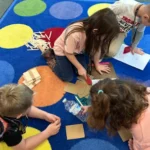
Problem: Birds returning in the spring often need a food source after migration. The class will design and create bird feeders to help birds find food near their school or community.
Objectives: Students will be able to:
1. Define the problem by identifying why birds need extra food sources in early spring
2. Identify materials and design a bird feeder that can hold food safely and attract birds
3. Measure and compare different designs, discussing attributes such as weight and size
4. Test and observe if the bird feeders attract birds, and evaluate the feeders’ functionality
5. Reflect on ways to improve the design based on observations
Links and Resources:
First Grade

Problem: After exploring sound and vibration students will design and build an instrument prototype using various materials that can create sound.
Objectives: Students will be able to understand the relationship between sound and vibrations and explain what causes sound.
Links and Resources:
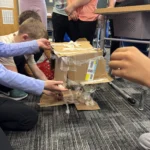
Problem: The town is growing rapidly and is concerned about water pressure. Building a water tower will alleviate the slow flow of water reaching the homes in the community. Students will design and create a prototype of a structure that is 2 ft tall, mimicking plant/animal structures for stability while also being able to deliver water to the base. The structure should be free standing with no human support.
Objectives: Students will be able to:
1. Understand the relationship of man-made objects to plant/animal structures
2. Accurately measure using direct comparison or non-standard units of measurement
3. Identify the 2D/3D shapes used to create structure
4. Create a tower based on the constraints and the problem
Links and Resources:
Second Grade

Problem: Design and build a prototype solution that prevents wind from damaging the land and structures built on it.
Objectives: Students will be able to explain erosion and use structural design to prevent erosion and deposition.
Links and Resources:

Problem: The power of the wind can change the land but can also be utilized as a resource. Students will design and build a prototype that can harness the wind to move an object.
Objectives: Students will apply key vocabulary to lessons and designs, determine how the wind changes the earth, identify the tools we use to prevent wind damage and use structural design to harness the power of the wind.
Links and Resources:
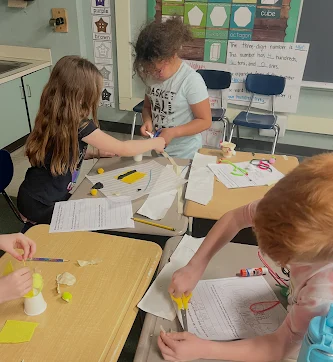
Problem: HELP! A farm has been hit with a harmful wave of pesticides that makes it unsafe for pollinators to survive in their fields. Create a structure that mimics the function of a pollinator so that this farm is able to have their plants pollinated during this harmful wave. The structure must carry pollen from one flower to another by traveling a specified distance. Success will be determined based on the amount of pollen that makes it to the final flower.
Objectives: Students will:
1. Conduct research on butterflies, moths, wasps, flies, and beetles to develop an understanding of the functions of the structure of these various pollinators
2. Draft and build a model that mimics the function of a pollinator in the process of pollination
3. Collect and analyze data to reflect on the design process of creating a model of a pollinator
4. Measure using various tools to collect data on their pollination collection
Links and Resources:
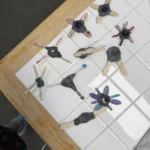
Problem: Create a spinning handheld item from a stationary point to help a student alleviate pent-up energy in a non-disruptive manner.
Objectives: Students will be able to:
1. Observe and discuss the differences between their first and second handheld
2. Graph the data recorded during their test spins
3. identify the following 2D shapes: square, rectangle, triangle, circle
4. Identify and measure the diameter of a circle
5. Observe what happens while test flying two different hand helicopters
6. discuss and analyze the differences they observed between the flying experiences of both hand helicopters
7. Design, create and build a spinning handheld that spins for at least 10 seconds using only the materials provided
Links and Resources:
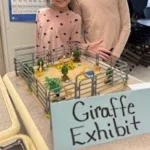
Problem: Design an exhibit for a chosen animal, considering specific criteria (size) and measurable outcomes, like space, resources, and environmental needs. The exhibit must include an entrance and exit for the zoo keeper to get in and out of the enclosure.
Objective: Students will be able to:
1. Understand the concept of a zoo exhibit and the needs of animals (space, resources, and environment needs)
2. Plan their zoo exhibit, focusing on size and shape
3. Measure and estimate the size of their exhibit using various tools
4. Identify and plan for the resources and environmental needs of their animal
5. Create a physical model of their zoo exhibit based on their plans, incorporating accurate measurements and environmental features
6. Evaluate the effectiveness of their zoo exhibit by considering how well it meets the needs of their animal
Links and Resources:
Third Grade

Problem: Explore the effects of magnets to design and build a car prototype to find if magnets can help us stay safe in a car collision.
Objectives: Students will brainstorm and develop ideas for preventing car collisions and explore cause-and-effect relationships among magnets.
Links and Resources:

Problem: Students will design and build a structural dwelling prototype that can withstand extreme weather such as high winds and heavy precipitation.
Objectives: Students will gain a deeper understanding of how climate affects weather and in turn, the structures we live in through investigating weather patterns and engineering design principles.
Links and Resources:
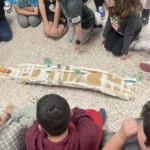
Problem: Design and build a pathway to help red crabs cross a busy street during their migration route to continue their life cycle. Your pathway must be at least 7 inches wide and must be at least 24 inches long.
Objectives: Students will be able to:
1. Identify the problem
2. Understand that some animals migrate to survive
3. Brainstorm possible solutions to the problem
4. Create and build a prototype to allow the crabs to safely cross a street
5. Test their prototypes and make changes if necessary
6. Measure within a quarter inch to follow the constraints of the lesson
7. Identify the life cycle of a red crab
8. Reflect on their success and how to improve their models
Links and Resources:
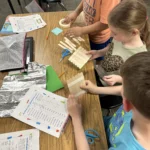
Problem: A hurricane is approaching the city zoo! The zookeeper is worried about the safety of the zoo’s prized animals. Each animal needs a secure enclosure to protect them from the high winds that a hurricane brings. The hurricane winds will be blowing on your structure for 10 seconds. Your structure must stay standing and remain within a 12×12 box that is on the ground! Help save your zoo animal!
Objectives: Students will be able to:
1. Identify how wind can alter and destroy structures
2. Build a structure that can withstand various wind speeds
3. Determine the cost of their materials while working within the constraints of a budget
4. Measure their structure to the nearest inch
Links and Resources:
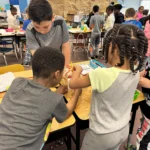
Problem: Construct a building/house to withstand the force of the winds of multiple levels of a fan (relate to real-world hurricanes).
Objectives: Students will be able to:
1. Define hurricanes and describe how they form
2. Analyze hurricane wind speeds
3. Create a bar graph comparing wind speeds of different hurricane categories
4. Identify key building features that might help structures survive hurricane-force winds
5. Test materials to determine the best options for constructing a hurricane-resistant structure
6. Budget their money to purchase materials for their structure
7. Brainstorm ideas of prototypes
8. Draw their prototype and label the supplies they will need
9. Construct their first model using at least 5 different materials
10. Test their structures using a fan simulating hurricane-force winds
11. Analyze their test results and make suggestions for improvements
12. Reflect on their work and self-assess their product and process
Links and Resources:
Fourth Grade

Problem: Design and build a town structure prototype utilizing essential features that allow the structure to withstand natural disasters while considering its environmental impact.
Objectives: Students will identify where energy comes from and how deriving it affects the environment. Students will select an energy source that creates the least environmental impact to power a town and construct a building that reduces impacts on natural Earth processes.
Links and Resources:
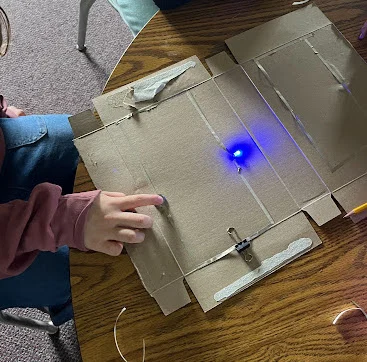
Problem: Design a circuit to make a light bulb light up, given several constraints.
Objectives: Students will be able to:
1. Understand that electric currents can travel from place to place
2. Measure to the nearest quarter inch, angles, parallel and perpendicular lines, and find the perimeter
3. Design a prototype of their light
4. Build and test their prototype to ensure their circuits work
5. Demonstrate their understanding of circuits by postering their prototype
Links and Resources:
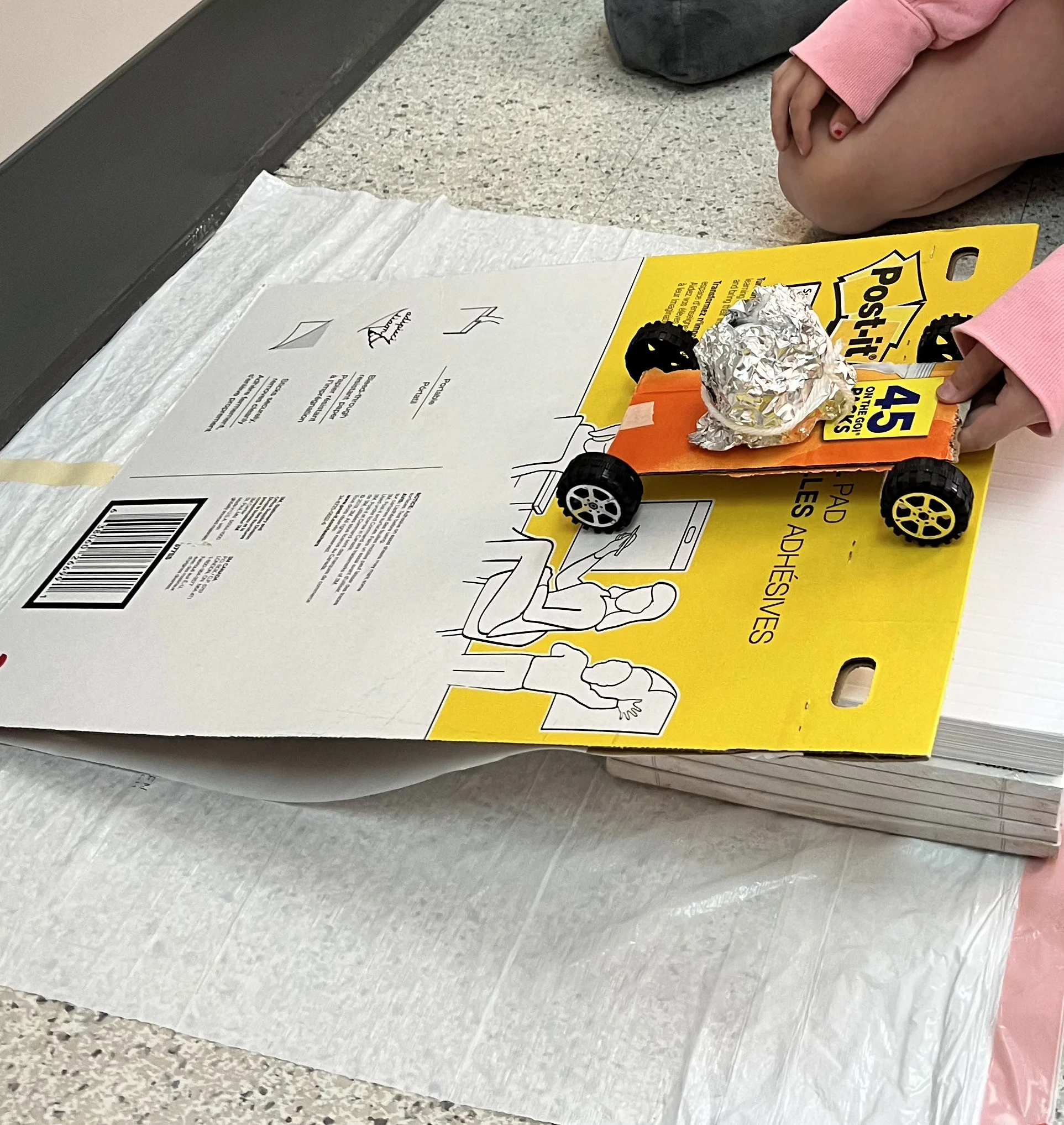
Problem: Design a “vehicle” prototype that will protect a passenger during a collision, using understanding of energy, energy transfer, and forces.
Objectives: Students will be able to:
1. Construct a vehicle prototype that operates within the criteria and constraints provided
2. Explain how energy transfers especially during collisions and describe the relationship between forces ( such as friction, gravity, resistance, etc.)
3. Convert between measurements as needed and then collect, organize, and analyze the collected data using such items like mean, median, and mode
4. Apply multiplication and division to a real world problem in terms of budgeting and creating a prototype
Links and Resources:
Problem: Create a shipping container prototype that will safely transport the fossil from the dig site to the museum.
Objectives: Students will be able to:
1. Identify the job of a scientist (paleontologist) and tools that they use
2. Create fossils out of air dry clay, analyzing which materials will/will not create a fossil
3. Classify and organize information while acting as a paleontologist
4. Identify the difference between reversible and irreversible change
5. Safely recover fossils from a dig site model using a coordinate grid to notate where the fossil was discovered
6. Create a shipping container prototype that will safely transport the fossils from the dig site to the museum (around the perimeter of the room)
Links and Resources:
Problem: Construct a prosthetic structure for an animal who has lost a body part to help it survive in its environment.
Objectives: Students will be able to:
1. Identify plant and animal internal or external structures and explain how these structures aid in survival, growth, behavior or reproduction
2. Generate and compare possible solutions based on criteria and constraints as they research a specific animal or plant that could benefit from a prosthesis and define the problem they are trying to solve
3. Present prosthesis designs and reflect on the engineering design process
Links and Resources:
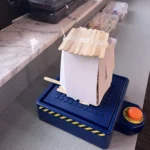
Problem: Construct a prototype of a free-standing building that is at least 9 inches tall with a base perimeter of no more than 5 inches on each side. The structure must remain standing when subjected to an earthquake simulation.
Objectives: Students will be able to
1. Investigate earthquakes and observe structures of different sizes and how they respond to an earthquake simulation
2. Create a plan and construct a building that can withstand an earthquake simulation
3. Test prototypes on an earthquake shaker simulation. They will record which level of shake their structure was able to withstand, along with observations of other groups
4. Consider failure points of the prototype and identify aspects that can be improved
Links and Resources:
Fifth Grade

Problem: Design and build a rocket prototype that can transport people and goods around the world and operate according to the given criteria.
Objectives: Students will design a prototype rocket that will launch using air and collect data for revisions as needed. Students will be able to interpret and apply Newton’s Laws of gravity to their prototype rocket.
Links and Resources:

Problem: Design and build a water filter prototype to clean simulated wastewater. Identify which filter mediums are needed to remove large and small particles from wastewater samples.
Objectives: Students will identify Earth’s spheres and how they interact. A focus on the hydrosphere will allow students to explore how water cycles through Earth, analyze the components of salt water vs fresh water, and develop a water filter to clean wastewater.
Links and Resources:
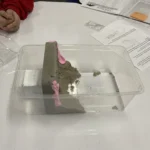
Problem: Design and build a prototype of a flood barrier using materials to protect a paper house from the flowing water. Student must use one material from the geosphere in building the barrier, that costs no more than $20. The barrier must withstand flowing water for 30 seconds.
Objectives: Students will be able to:
1. Describe and explain how the hydrosphere and geosphere interact in real world scenarios. Students will be able to define the term “flood”
2. determine which materials would best withstand flood waters (sand, dirt, clay, etc)
3. Given a budget of $20, students will choose which materials to use in construction and compute the total amount using addition and multiplication
4. Design and build a prototype of a flood barrier to protect a paper house from flowing water
5. Test and revise their plan to better protect the paper house from flowing water
Links and Resources:
Sixth Grade
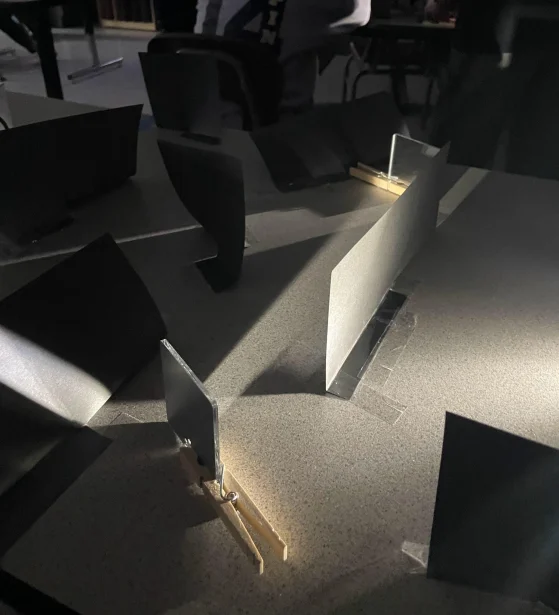
Problem: Design and build a mirror maze that will get a beam of light from one end of the maze to the other.
Objectives: Students will demonstrate the simple premise of light reflection, refraction, and absorption.
Links and Resources:
Contact the Department
Valparaiso University’s education faculty welcomes outreach from prospective students, alumni, education professionals, and community members.
Wendy Paterson, Administrative Assistant
Dr. Selina Bartels, Department Chair
Douglas Wassilak, Director of Teacher Education Programs & Clinical Practice
department of education
219.464.5077
Loke Hall
1100 Campus Drive South
Valparaiso, IN 46383