



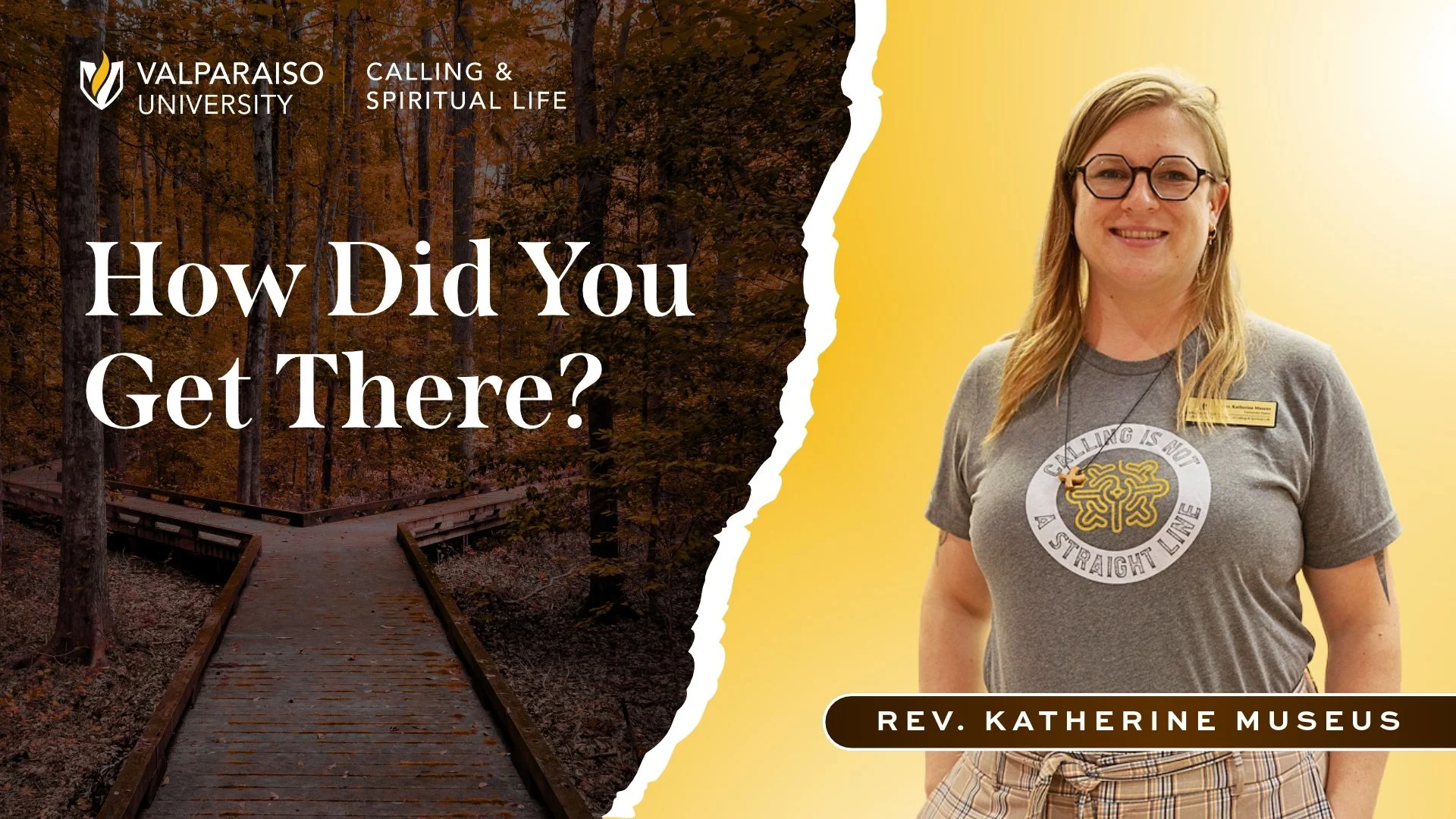
How did you get to where you are today?
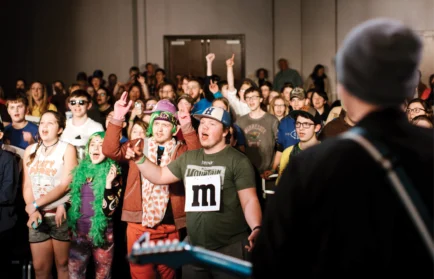
“…when we slow down and listen – we don’t just get better answers. We get something more than that. We get perspective, we get understanding, we get real stories that we would’ve otherwise missed. And that? That’s the part that stuck with me the most from this [VUE project]. Because the best part of a conversation isn’t the questions you ask – it’s the story you almost missed.”
– Lindsay Opiola (sophomore), VUE Keynote, September 2026
The official theme for our Monday Morning Prayer speaker series is “For this, I am Grateful.” After half a semester of gratefulness stories from staff and faculty, another theme is naturally emerging: we are grateful for the surprises that became turning points, leading us to where we are today.
Thomas Arce literally took a wrong turn, and he made an unplanned college visit. He traced his steps from that mistake to his career in student life.
When Jim Wetzstein became pastor of his first church, he was sure that he was the wrong guy for the job. But not only did he cherish his time in that community – he also would not have met his wife, or begun work at Valpo, had he been sent somewhere else.
Diego Piedra followed an unexpected opportunity to study in the U.S. for a year, then was surprised by a scholarship that allowed him to continue. He may have built his life in an entirely different country without these plot twists.
How did you get to where you are today? It’s a question that invites stories – some of the most important stories of our lives. And because of that, it’s a question that helps us to better understand one another individually and ourselves as a community. How did you get to where you are? Why do you do what you do? Why do you believe what you believe? In other words: What makes you who you are?
The book of James tells us: “You must understand this, my beloved siblings: let everyone be quick to listen, slow to speak, slow to anger, for human anger does not produce God’s righteousness” (James 1:19-20).
Part of the wisdom of this advice is that, when we listen to others’ stories, we may indeed be slower to anger as a result. Just as we hope others will understand our stories –
–I’ve been overwhelmed by extra projects this week, please understand why I haven’t responded to your email yet…
–Please don’t use that word around me, it’s been used to hurt me too many times…
–I have a strong opinion about that issue because of what happened to me personally…
–Just as we hope others will understand us through our stories, hearing another person’s story can help us to be more understanding. And the intentional practice of asking questions and listening to stories – that can help us build a culture that feels slower to anger, and safer to live and move and make mistakes in.
In our lives, we will encounter unexpected twists and turns: good things, tragic things, accidents, and the consequences of our own choices. These will become the stories that make us who we are.
I pray for the gift of living in a community of people that listens to one another’s stories before jumping to conclusions; I pray for the grace to be a listener myself.
– Pastor Kate
Rev. Katherine Museus and Rev. James A. Wetzstein serve as university pastors at the Chapel of the Resurrection at Valparaiso University and take turns writing bi-weekly devotions and reflections with the Institute for Leadership and Service staff.