



When tornados occur, timely and effective communication can mean the difference between safety and tragedy. A new paper by researchers at Valparaiso University, the University of Illinois Urbana-Champaign, and the Lawrence Livermore National Laboratory, “Reflecting on a Decade of Formalized Tornado Emergencies,” examines the guidelines provided to National Weather Service (NWS) forecasters for upgrading a tornado warning to a tornado emergency, investigating how often these guidelines are met when a tornado emergency is issued.
“The science behind meteorology is useless if the public doesn’t understand it,” said meteorology major Eli Conklin ’27, a student researcher on the project. “Their response is what’s supposed to keep them safe. The tornado emergency declaration can be a really powerful tool to help the public understand what’s going on.”
The NWS defines a tornado warning as a situation wherein a tornado has been sighted or indicated by weather radar, posing significant risk to lives and property. A tornado emergency is defined as an event in which a violent tornado has touched down in the forecaster’s watch area, representing a severe risk to life and property and with catastrophic damages already confirmed. Area forecasters are recommended to follow a set of NWS-defined guidelines when deciding to issue a tornado emergency.
Guidelines for issuing tornado emergencies are non-compulsory, and forecasters are encouraged to use their own judgement and experience. This, and general communication issues, including changes to the guidelines in the past twelve years, have led to some disagreements within the meteorological community about what these guidelines say and how to use them. The goal of the paper, and the larger project surrounding it, is to identify how guidelines can be revised to create a consistent, universal framework that can help ensure everyone in the community has access to accurate information.
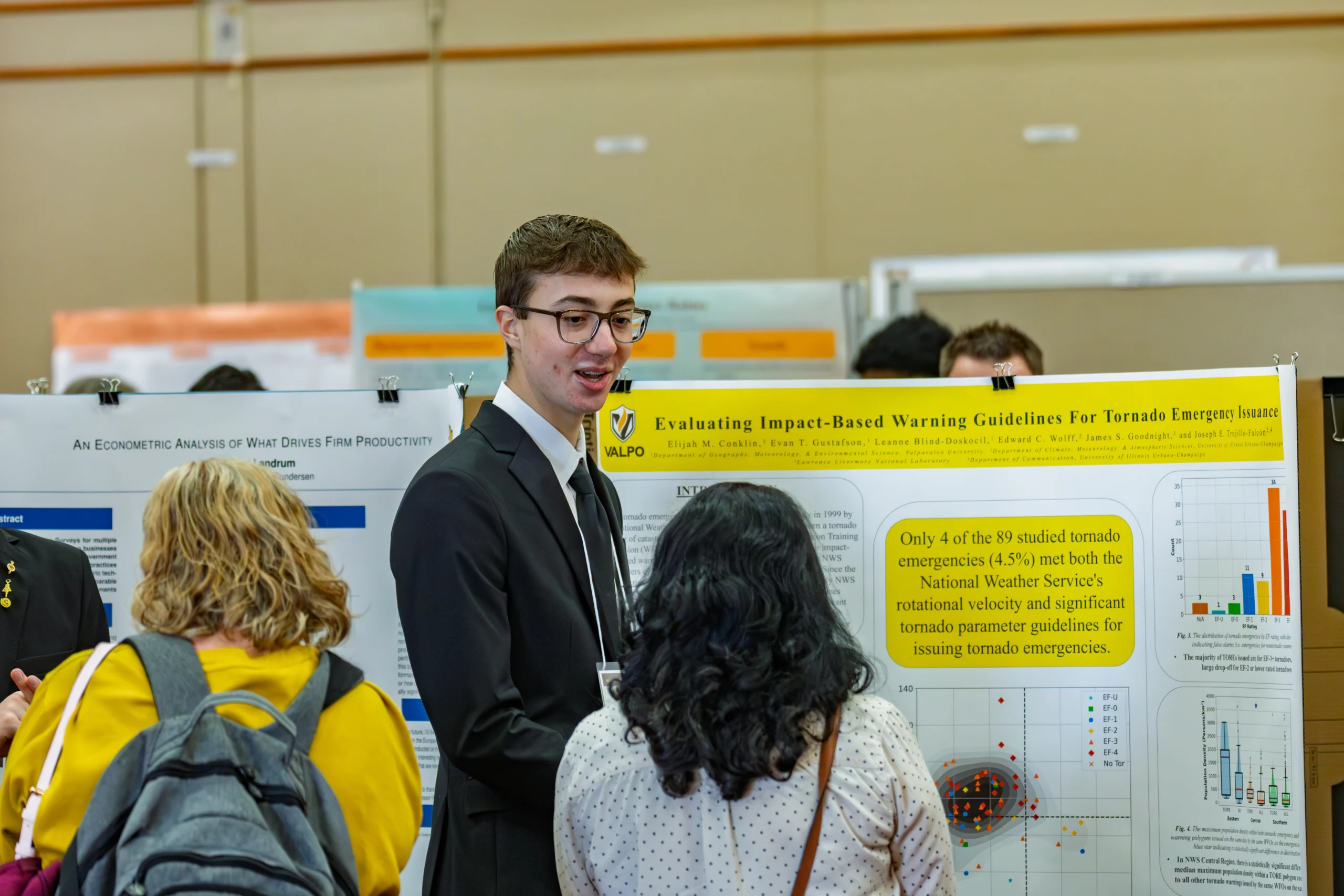
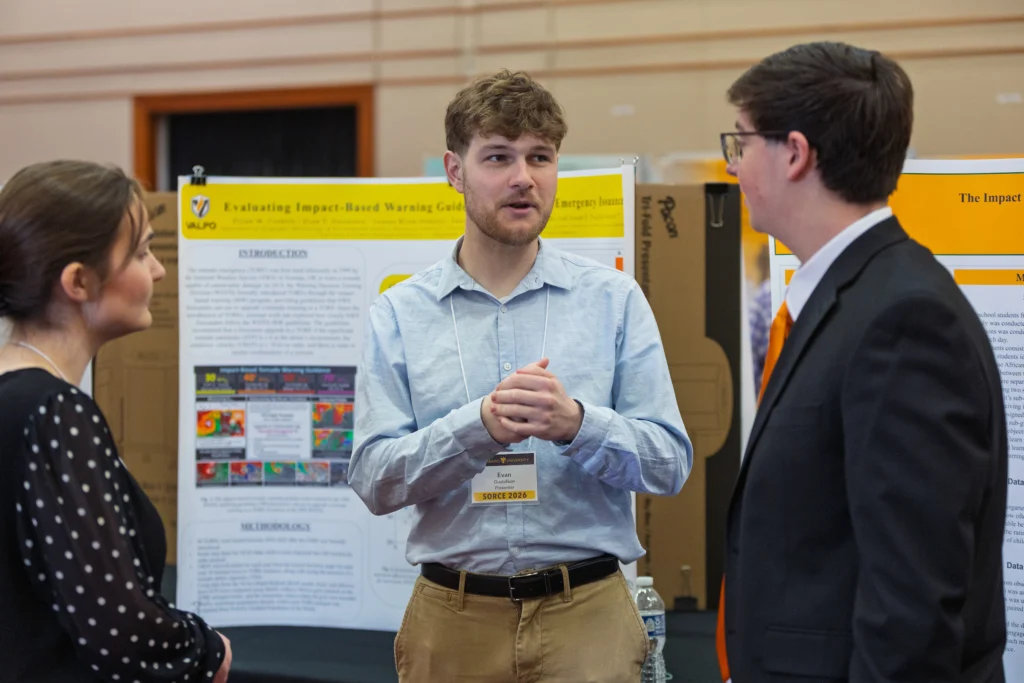
To determine how closely forecasters are following the current system of guidelines, Conklin, and fellow meteorology major Evan Gustafson ’26 performed a radar scan analysis of every tornado emergency to have occurred between 2014 and 2023. Examining rotational velocity, the tornado’s environment, debris signatures, and local population densities (though that is no longer part of the NWS guidelines), Conklin and Gustafson found that many of the events that had been declared emergencies did not meet all the guidelines laid out by the NWS for such a warning. However, the majority of those emergencies were declared for tornadoes ranked EF3 and higher, meaning that, although they didn’t check all the boxes, the destructive potential was very much present.
“Forecasters are doing what they should be doing, even if they’re not following these guidelines,” said Leanne Blind-Doskocil, staff meteorologist and head of the Valpo research team. “So now we’re interviewing forecasters to see what their process is, so we can recommend new guidelines that meet those practices.”
Other future steps for the project include researching the impact of socioeconomic factors (such as families with mobile homes or who do not have access to vehicles) on the destructive potential of a tornado and gauging how the public understands and reacts to the different levels of tornado warnings.
Regardless, Blind-Doskocil emphasized the importance of taking every warning seriously. “If the NWS is issuing a tornado warning of any level, they have a good reason,” she said. “They’re getting reports of a tornado or seeing rotation on radar. If you find out about the potential for a tornado a few days before, review your safety plans and make sure you aren’t out and about when the time comes.”
“Reflecting on a Decade of Formalized Tornado Emergencies” was published in the Bulletin of the American Meteorological Society this August. Conklin and Gustafson also presented their work at Valpo’s Symposium on Research and Creative Expression, where they won first prize for undergraduate posters, and at the 32 Conference on Severe Local Storms in Madison, WI in August. Gustafson has since begun graduate studies at the University of North Dakota.