




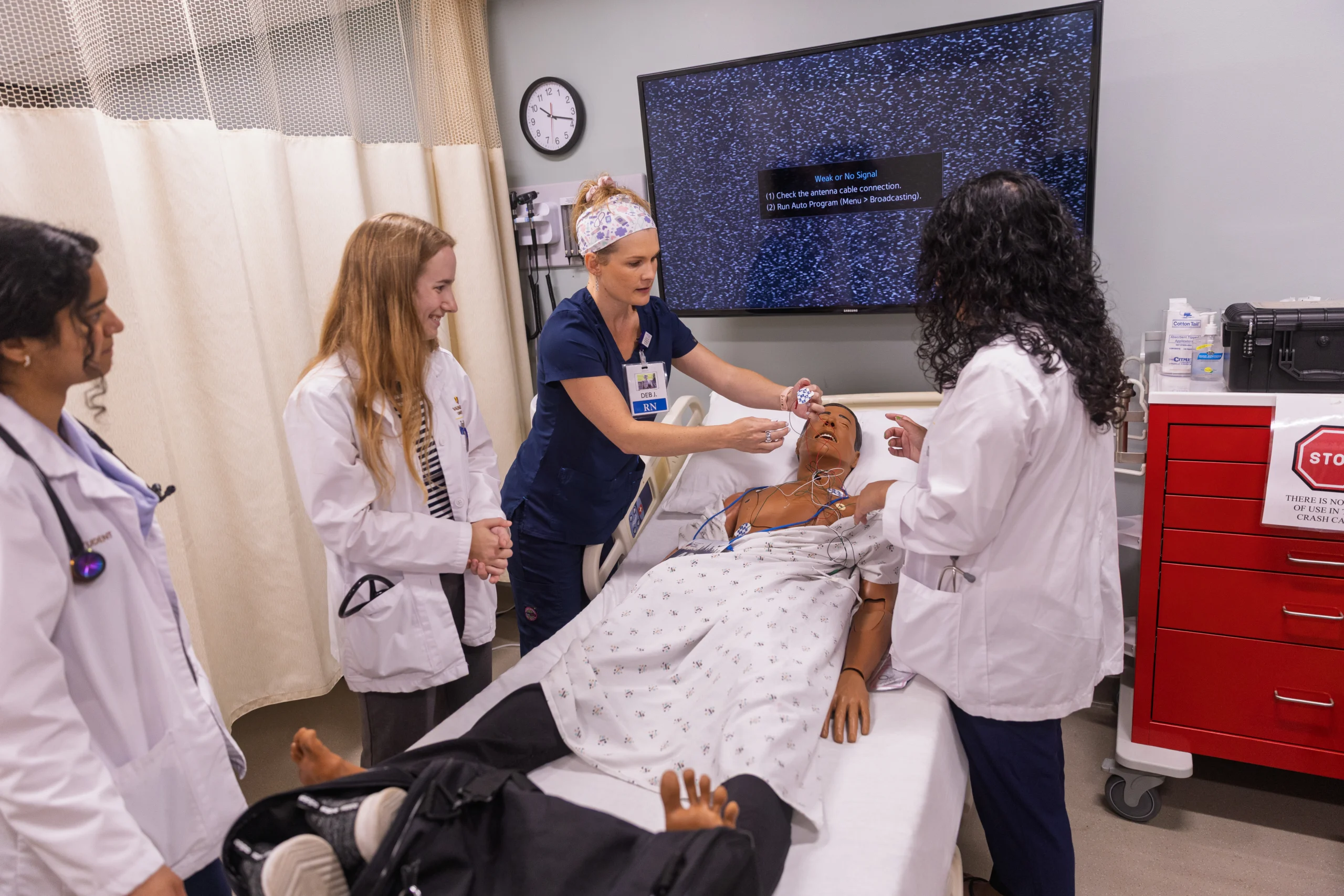
About five years ago, Associate Professor Emerita Chris Paquin ’11 DNP recognized that the students in the College of Nursing and Health Professions accelerated nursing program had needs that were different from those of traditional Valparaiso University students. Students in our program often have jobs, families, and additional responsibilities, requiring a different type of support system. In the years following the COVID-19 pandemic, students would often express feeling disconnected, lonely, or isolated. Soon, Professor Paquin began a faculty-led program she called Connected and Stay Strong, or CASS.
CASS offers students an opportunity to step away from the demands of their programs, connect with their peers, and talk openly about the challenges they are facing. More than anything, CASS is about reminding students that they are not alone. Professor Paquin explains, “The CASS sessions have been a healing and comforting experience for many of the faculty and students who have attended.” She adds, “The most common feedback I have heard is ‘I’m so glad to know that I’m not the only one who feels this way.’”
Originally held during the summer for accelerated nursing students, CASS was offered on a limited basis during faculty retreats, class sessions, and within the physician assistant program. With support from Dean Elizabeth Gmitter, Ph.D., a work-study opportunity opened up to make CASS available more widely.
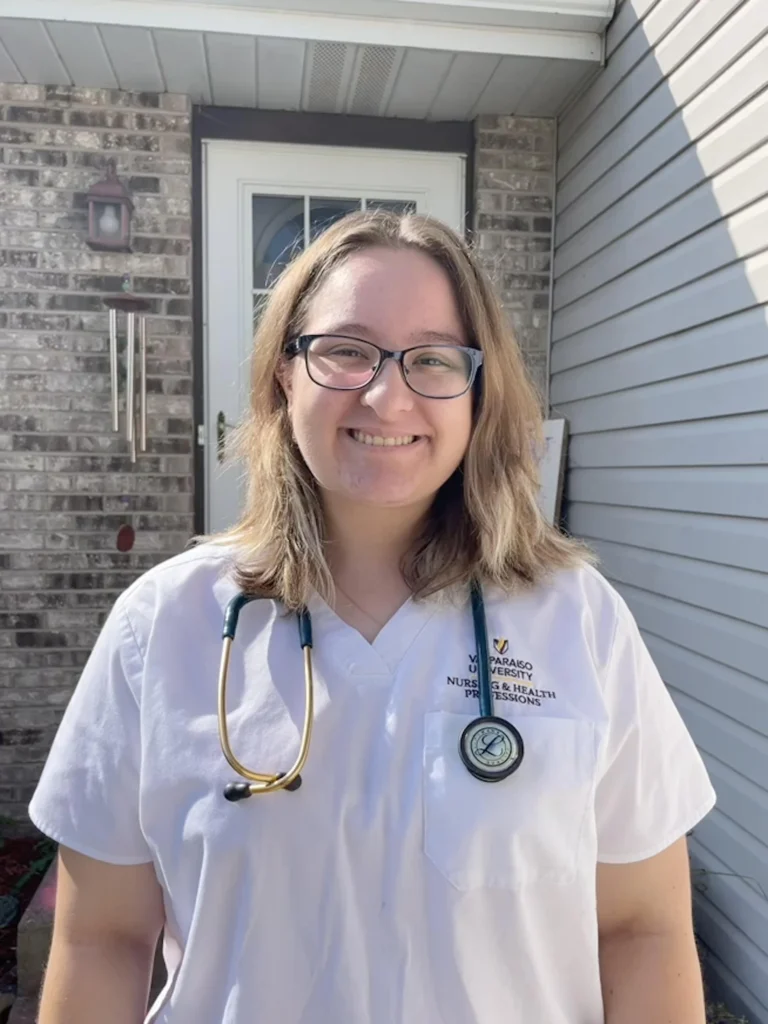
Having had such an impactful experience during her class session, Elizabeth Kaiser ‘27 volunteered to lead. “Having that sense of community is very helpful,” says Elizabeth, “It teaches resilience. You can talk with your peers there, you can talk about your problems, and it’s just so nice because you feel like you have a good group of people that you can share what’s up.”
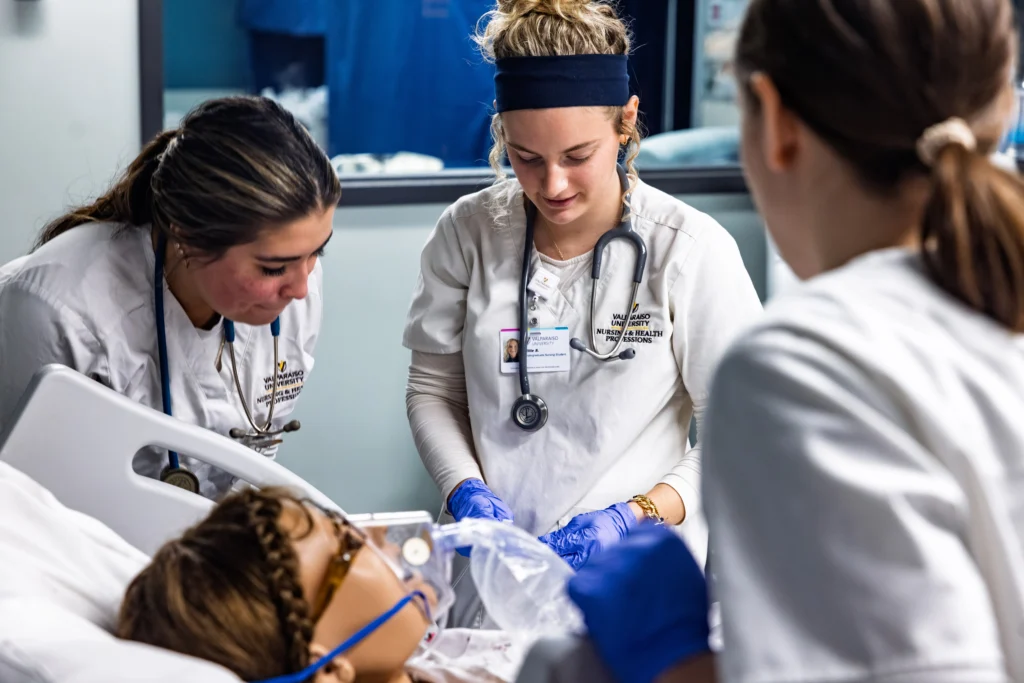
The group started slowly, but by the end of the last semester, attendance had grown to about six students at a meeting. Elizabeth and other student leaders typically facilitate the sessions together, creating a shared environment where students can participate at whatever level feels comfortable. CASS is not therapy, counseling, or a place to receive professional health advice. Instead, it is a guided peer-support experience. Students can talk about what is stressing them, listen to others who may be experiencing similar challenges, and learn from the ways their peers are navigating those experiences. Students are also welcome to simply listen. “We’re all students here, and it’s just a space to share your thoughts and feelings and just really talk about what’s stressing you out,” Elizabeth says.
A typical CASS session begins with introductions and a lighthearted icebreaker before students check in with one another about how they are doing. From there, students may choose from topics such as stress, balance, or self-care. They take a few minutes to reflect individually before discussing their thoughts in pairs or as a group. The conversations often reveal just how much students have in common. “Students tend to find similarities within their struggles,” Elizabeth says. “I find in nursing school especially – like with the stress of the exams, with the stress of, ‘Oh my gosh, it’s so busy’ – I have no time for anything. Students learn coping strategies from each other.”
That exchange is one of the most valuable parts of CASS. Students aren’t necessarily looking for someone to solve their problems. Sometimes, they simply need validation that what they are experiencing is shared by others. A student might hear that a peer sets aside the weekend for rest and then decide to try something similar. Another might discover a new approach to managing stress. Sometimes, the most important takeaway is simply hearing someone else say, “I feel that way, too.” The group also incorporates activities such as breathing exercises and brief moments of reflection, giving students an opportunity to slow down in programs where the pace can often feel relentless.

For Katherine Martin ’16, ’23 MSN, clinical assistant professor of nursing and director of the Center for Experiential Learning (CEL), CASS is about more than helping students through a difficult semester. It is about helping them develop habits of connection and support that they can carry into their professional lives. Professor Martin, who has worked as a nurse for more than a decade, knows firsthand that the emotional weight of healthcare doesn’t always end when a shift does. “Nursing is stressful. Nursing is demanding,” Professor Martin says. “Oftentimes, what you go through, it doesn’t leave you. Your shift might be over, but those things are still with you.”
CASS can help students begin building the muscle memory of seeking support — learning early in their education who they can turn to, how to talk through difficult experiences, and how to create supportive relationships with colleagues. Professor Martin hopes students eventually carry that culture of support into clinical environments and their future workplaces. “I would love to discover that they’re doing CASS sessions as part of their monthly nursing meetings,” she said. “The support in our healthcare community is just so necessary.”
The challenges students bring to CASS are varied, but some themes come up again and again: feeling out of balance, struggling to find time for self-care, and managing the competing demands of school, work, and family. For students farther along in their education or transitioning into a new health profession, there can also be questions of identity. “Who am I now?” Professor Martin poses, describing a common challenge students face as they transition into another profession. “It’s uncomfortable because you’re unsure.”
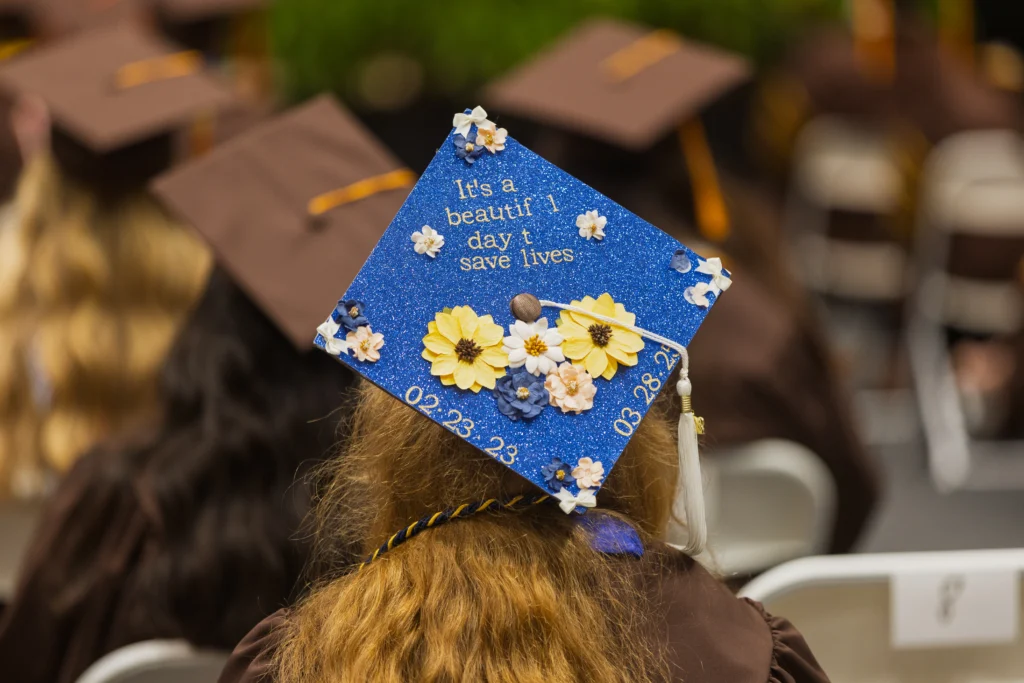
That uncertainty can be easier to navigate when students realize others are experiencing it, too. After one CASS session, Professor Martin remembers a student who had arrived feeling isolated. By the end of the conversation, the student said she no longer felt alone. “That was pretty impactful,” Professor Martin says. “She felt the community, which is kind of the objective of our whole setup.”
For Elizabeth, creating that feeling of connection is what makes leading CASS so rewarding. She has been surprised to see how much students at different points in their programs have in common. “It doesn’t matter what year you are. It doesn’t matter how far you are in the program,” she says. “Everyone really appreciates having the sense of connection and help.”
That experience has also shaped the kind of nurse Elizabeth hopes to become. Through CASS and her psychiatric nursing coursework, she has developed an even stronger interest in mental wellness and resilience. “We’re all about our patients. We love our patients. We want to help our patients most,” she says. “But it is so important to help us first. Especially because if we can’t help ourselves and be well and happy and healthy, we can’t help our patients as best as we can.”
As a relatively new program, CASS is still building awareness among students. Elizabeth believes some students may hesitate simply because they aren’t sure what to expect, while others may struggle to make time for one more commitment in an already busy schedule. There can also be a fear of judgment or uncertainty about whether it is truly safe to share.
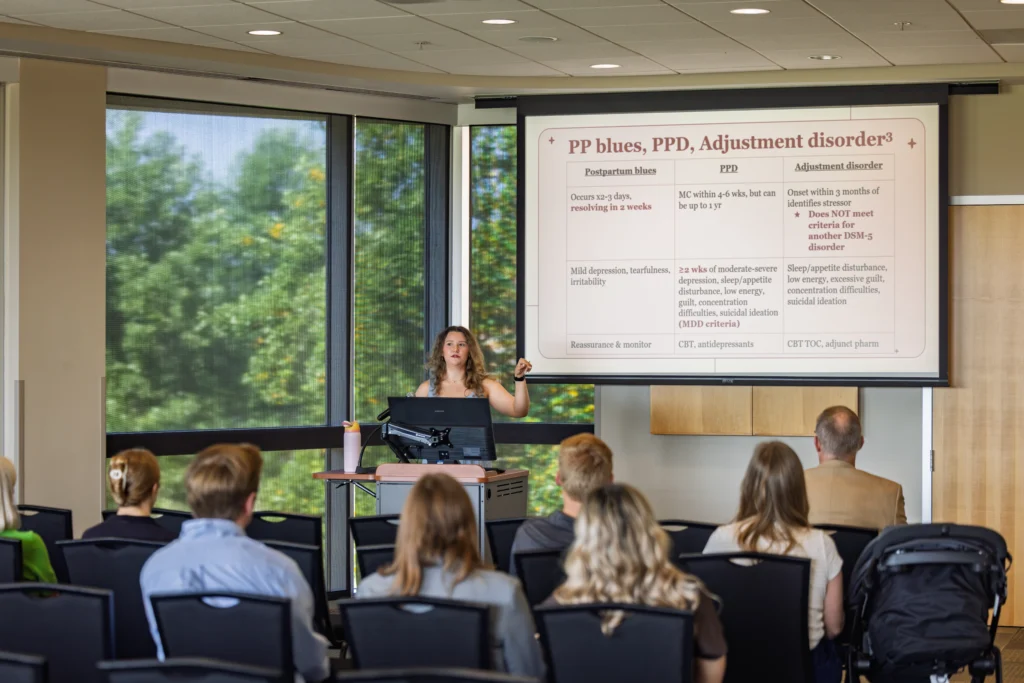
That is precisely what CASS is designed to address. Students are asked to respect one another, maintain privacy, and contribute to a judgment-free environment. And no one is required to speak. “You don’t have to put on airs that I’m okay,” Professor Martin says. “If you’re not, you’re not, and let’s talk about it.”
As CASS continues to grow, Elizabeth hopes future student leaders will carry the program forward and that more students will take advantage of the resource. Professor Martin shares that hope — not only for the students currently participating, but for the culture of health care they will eventually help create. “Anything to avoid someone suffering in silence,” she says, “is so important.”
CASS meets weekly during the fall and spring semesters, with meeting dates established to accommodate student schedules. Learn more about the ways College of Nursing and Health Professions students are supported through CASS on Instagram by following @cass.vuconhp.