








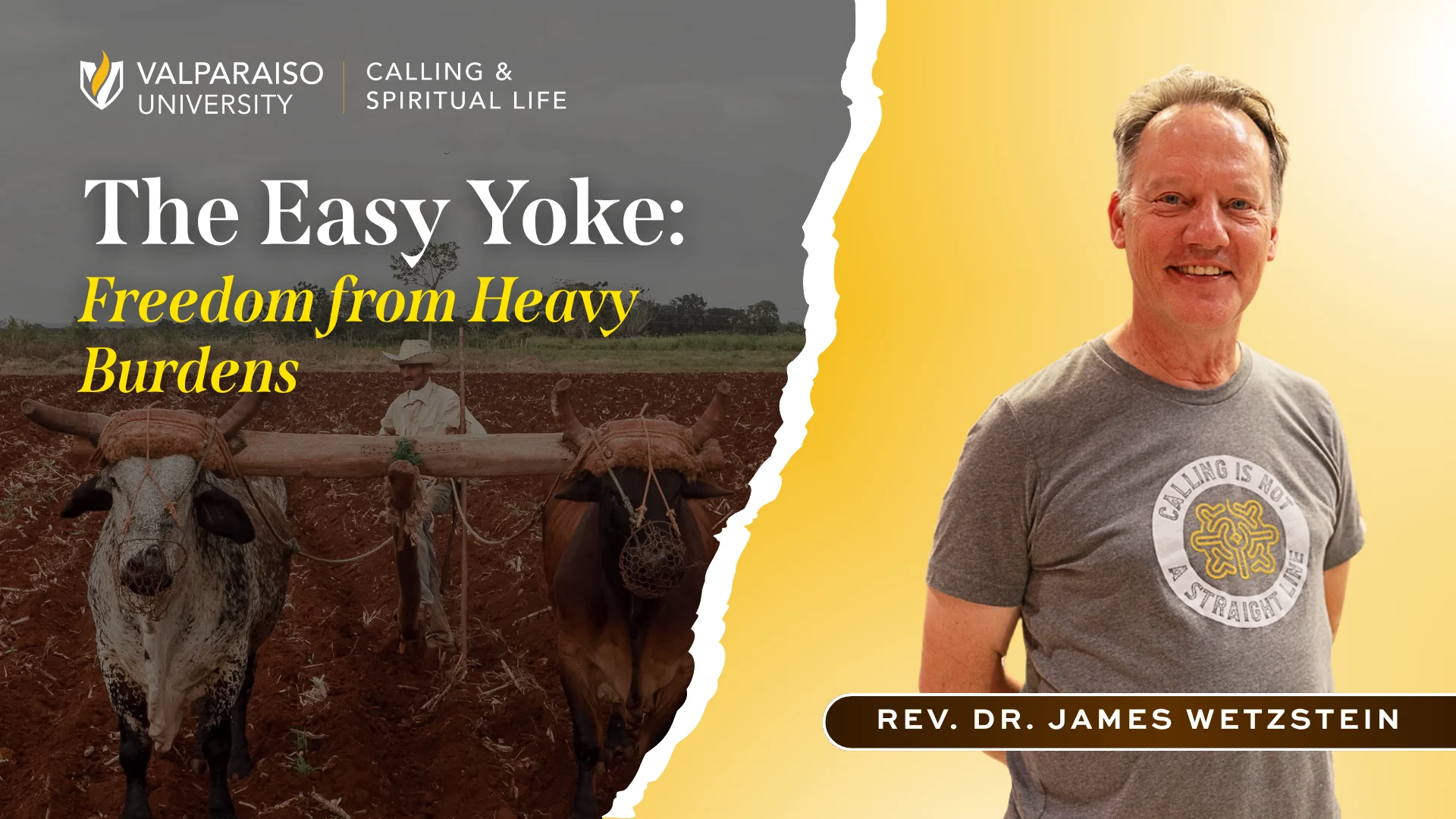
The Gospel according to Matthew records Jesus using a unique metaphor not found elsewhere in the Gospels: a yoke, like one placed on oxen. Jesus invites his listeners: “Come to me, all you who are weary and burdened, and I will give you rest. Take my yoke upon you and learn from me, for I am gentle and humble in heart, and you will find rest for your souls. For my yoke is easy and my burden is light.” But what does it mean to take on Jesus’ yoke and burden?
Historical and Biblical Context
In Matthew, Jesus addresses people oppressed by religious leaders who burdened them with unrealistic, heavy expectations regarding righteousness before God. Earlier in this same chapter, Jesus praises his Father that true wisdom is revealed to the humble rather than the arrogant who rely on their own ability to keep the Torah and satisfy divine expectations. Thus, Jesus contrasts his burden with the oppressive load imposed by religious authorities.
Jesus does not suggest that religious observance itself is wrong, but rather criticizes how it was being implemented. Elsewhere in the Scriptures, the metaphor of a yoke signifies oppression—often depicting subjection to a foreign imperial power, sometimes visualized as a heavy yoke of iron. In contrast, Jesus describes his yoke as “easy” and his burden as “light.”
Jesus may also be drawing on a rabbinic tradition that frames the Torah—obedience to the Word of God—as a yoke. Since Jesus is the Word of God incarnate, his way of obedience is not burdensome, but gentle and liberating, especially for those experiencing oppression.
Modern Expressions of Idolatry and Overwhelm
How does this speak to our lives today? Truly, some of us have experienced religious communities or institutions to be oppressive, triggering shame rather than a sense of belonging. More broadly, however, the heavy burdens we carry often stem from modern forms of idolatry—the false gods of performance, accomplishment, relentless people-pleasing, and serving to the point of exhaustion.
We overextend ourselves to collect every experience, satisfy every demand, or manage internal insecurities, working tirelessly to build our own sense of security. Human beings remain fundamentally prone to idolatry, creating demands that can never be fully satisfied.
The Invitation to Rest
In the face of these relentless demands, Jesus offers himself. His yoke brings fulfillment through an obedience grounded in love, forgiveness, grace, and gratitude. If you are running ragged today—feeling as though your to-do list is endless or that you can never measure up—take a moment to hear Jesus’ invitation.
He calls us to a more satisfying way of life, reminding us that our identity is rooted in the rule and reign of God. As those made righteous and complete in Christ, we no longer need to serve impulses that never satisfy.
The Yoke and the Cross
Elsewhere in the Gospels, Jesus speaks of taking up a cross, using two different images of bearing a load. These calls target different conditions: to the self-satisfied who seek grandeur and self-sufficiency, Jesus points to the way of the cross—the path of self-emptying and sacrifice. But to the weary and heavy-laden, beaten down by life’s circumstances, Jesus offers gentle rest: “Take my yoke upon you, for it is easy and light.”
Pr. Jim
Rev. Katherine Museus and Rev. James A. Wetzstein serve as university pastors at the Chapel of the Resurrection at Valparaiso University and take turns writing bi-weekly devotions and reflections with the Institute for Leadership and Service staff.