





Doctor of Nursing Practice (DNP) — BSN to DNP
Valparaiso University’s BSN-to-DNP program is a direct path from your bachelor’s degree to earning a doctoral nursing degree, equipping you with the advanced clinical skills and leadership expertise to make a lasting impact in healthcare. Take the next step in your career by gaining the clinical knowledge and leadership expertise needed to become a sought-after healthcare practitioner specializing in family practice.
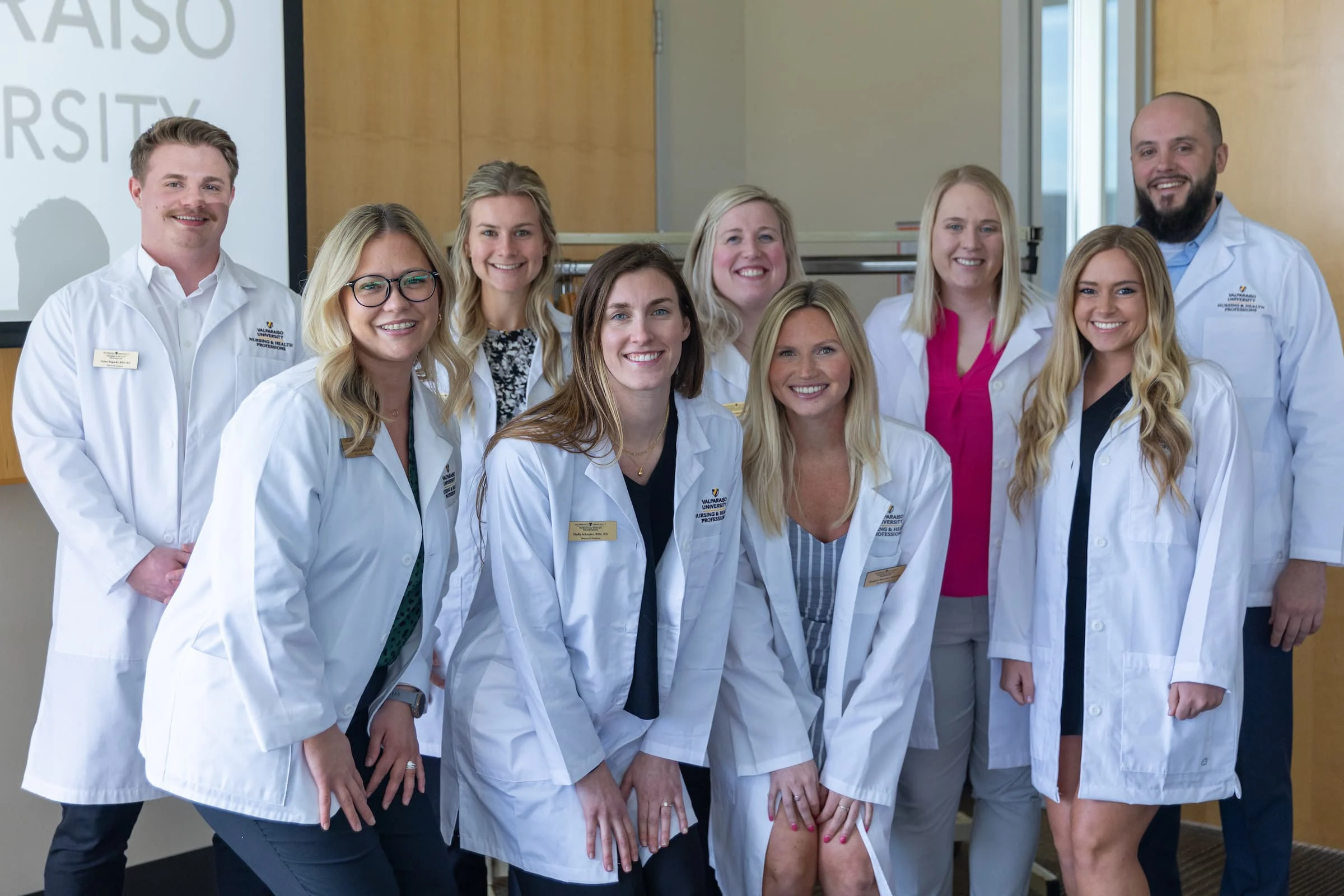
About Our BSN-to-DNP Program
Valpo’s accredited BSN-to-DNP program is built for working nurses who are ready to lead. You’ll complete 70 credit hours through a flexible, online curriculum, so you can balance your studies with professional and personal commitments. During the program, you’ll only need to come to campus twice: once for a hands-on intensive in your first year, and once at the end of the program.
Earn your DNP in as few as three years with this direct, efficient path into entering advanced practice roles.
Valpo also offers a post-master’s DNP pathway for nurses with a master’s degree.
The need for advanced practice nurses has never been greater. Employment of nurse practitioners is projected to grow 41% from 2025 to 2035, according to the U.S. Bureau of Labor Statistics. This is the highest growth rate of any occupation in the country, as of 2025, driven by an aging population and a growing emphasis on preventive care.
As a Valpo DNP graduate, you’ll be prepared to sit for the Family Nurse Practitioner (FNP) certification exam. This certification along with active state licensure allows you to work as an Advanced Practice Registered Nurse (APRN) across a wide range of settings, including:
- Primary care and outpatient clinics
- Local hospitals and health systems
- Government agencies such as FEMA
- Top-tier medical centers such as University of Chicago, Rush, and Northwestern Medicine
- Community and federally qualified health centers
- Specialty and rural practice settings
FNPs provide holistic care to patients across the lifespan, from infants to seniors, and play a crucial role in underserved communities where physician shortages exist.
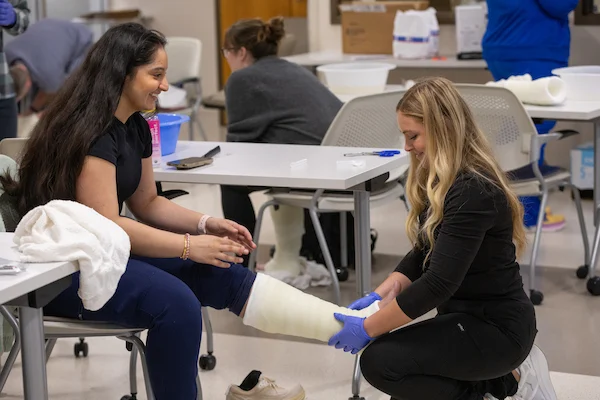
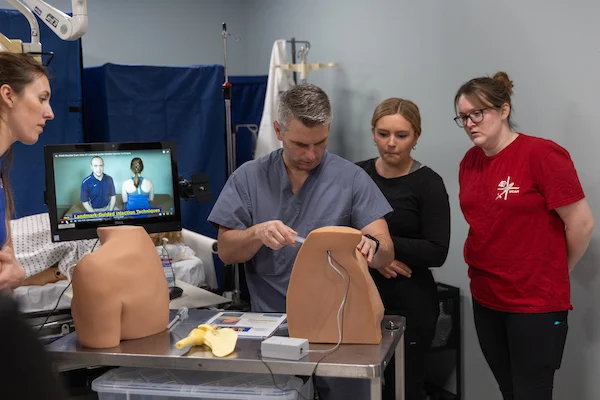
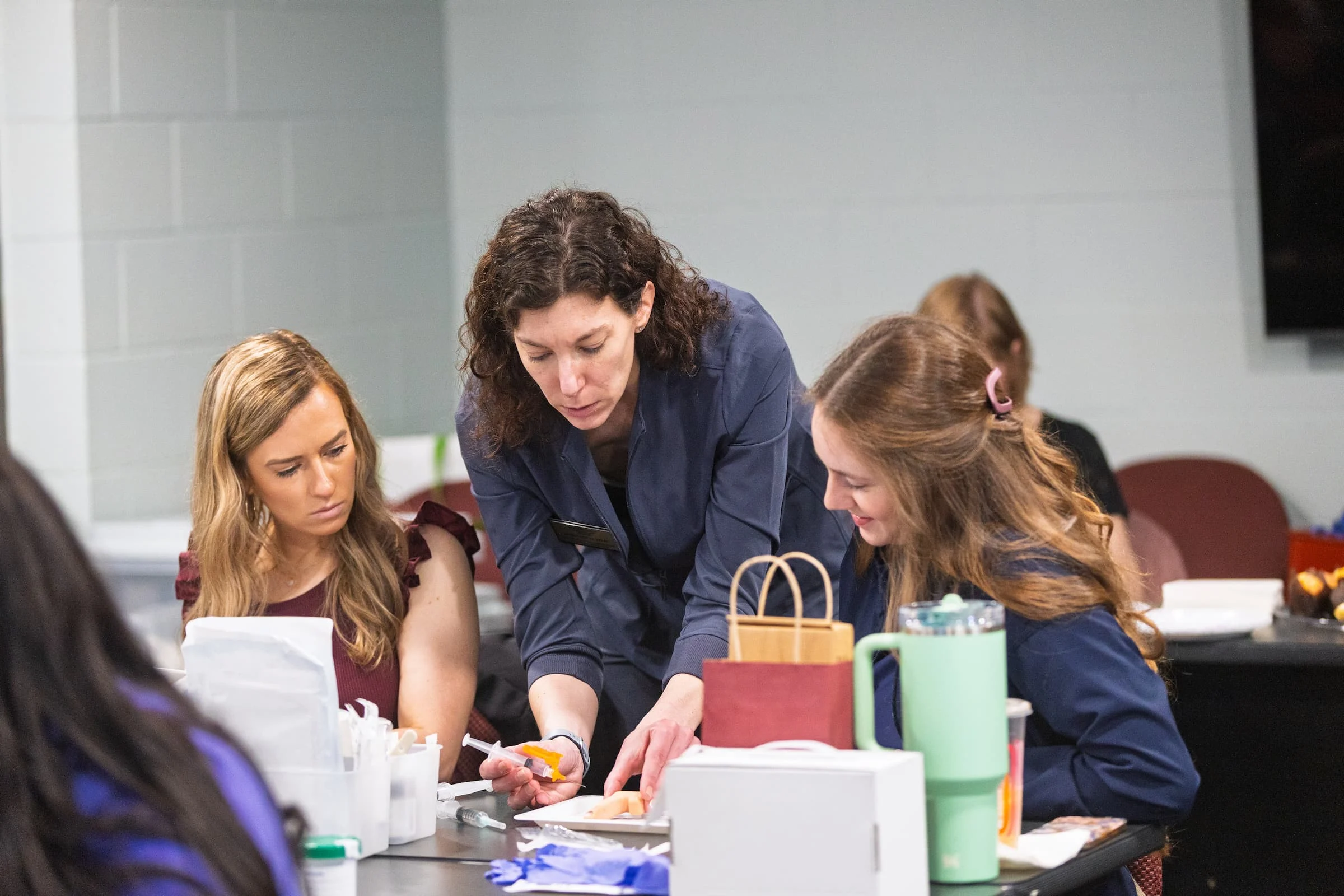
Hands-on learning complements your online coursework through two on-campus experiences and 800 clinical hours. In your first year, you’ll come to campus for an on-site intensive tied to your advanced health assessment and procedures courses. Faculty will guide you in workshops on splinting, casting, joint injections, and common office procedures, and you’ll also participate in standardized patient and objective structured clinical examinations — the kind of real-world preparation that sets Valpo graduates apart.
Your clinical hours will span primary care, women’s health, and pediatrics, preparing you to care for a wide variety of patients. In your final rotation, you will also have the opportunity to spend 40 hours in a specialty setting. Placements are completed at outpatient sites near your home, and Valpo’s College of Nursing and Health Professions will help assist with placement to ensure every site meets program requirements.
At the end of your program, you’ll return to campus for a capstone experience: presenting your DNP project, working through standardized patient scenarios, and engaging with a panel of field experts. It’s a meaningful milestone and a celebration of what you’ve accomplished as you look ahead to what comes next.
The DNP curriculum builds on your BSN by providing clinical preparation as an advanced practice registered nurse (APRN) and expanding your knowledge in evidence-based practice, quality improvement, and healthcare leadership. In addition to advanced clinical skills, your coursework will cover areas such as:
- Organizational and systems leadership in healthcare
- Business and legal aspects of advanced practice nursing
- Epidemiology
- Ethical issues in advanced practice nursing
Doctor of Nursing Practice, DNP
Total: 70 Cr.
Course Requirements
- NUR 502 – Pathophysiology for Advanced Practice Nursing – 3 Cr.
- PHS 503 – Biostatistics – 2 Cr.
- IPE 603 – Principles of Epidemiology – 2 Cr.
- NUR 605 – Advanced Health Assessment – 3 Cr.
- NUR 606 – Pharmacologic Principles for Advanced Nursing Practice – 3 Cr.
- NUR 610 – Procedural Techniques for Advanced Nursing Practice – 3 Cr.
- IPE 640 – Applications in Quality Improvement, Patient Safety, and Population Health – 3 Cr.
- NUR 671 – Foundations of Research and Evidence-Based Practice – 3 Cr.
- NUR 672 – Theories and Concepts for Advanced Nursing Practice – 4 Cr.
- NUR 701 – Role of the Advanced Practice Registered Nurse – 3 Cr.
- IPE 710 – Leadership in Quality and Patient Safety – 1 Cr.
- NUR 711 – Ethical Issues of Advanced Nursing Practice – 3 Cr.
- NUR 712 – Organizational and Systems Leadership in Healthcare – 3 Cr.
- NUR 713 – Business and Legal Aspects of Advanced Practice Nursing – 3 Cr.
- NUR 721 – Health Promotion Across the Lifespan – 3 Cr.
- NUR 722 – Application of Advanced Practice Registered Nurse, Role I – 2 Cr.
- NUR 731 – Managing Common Health Conditions – 3 Cr.
- NUR 732 – Application of the Advanced Practice Registered Nurse, Role II – 2 Cr.
- NUR 741 – Managing Complex Health Conditions – 3 Cr.
- NUR 742 – Application of the Advanced Practice Registered Nurse, Role III – 2 Cr.
- NUR 752 – Application of Advanced Practice Registered Nurse, Role IV – 2 Cr.
- NUR 771 – Improvement and Implementation Science for the Advanced Practice Registered Nurse – 3 Cr.
- NUR 799A – Doctor of Nursing Practice Project A: Development – 3 Cr.
- NUR 799B – Doctor of Nursing Practice ProjectB: Implementation – 4 Cr.
- NUR 799C – Doctor of Nursing Practice Project C: Evaluation – 4 Cr.
- NUR 799D – Doctor of Nursing Practice Project D: Continuation – 3 Cr. (if needed)*
*Note: A nursing lab fee is associated with NUR 605, NUR 752, and NUR 799.
Admission to the doctor of nursing practice (DNP) program is decided by the following criteria:
- A completed Valparaiso University graduate application.
- Official transcripts showing a BSN degree or higher from a regionally accredited college or university.
- Cumulative undergraduate/graduate GPA of 3.0 or higher.
- Active, unencumbered RN license in an approved state.
- Current curriculum vitae (CV) or resume.
- Two letters of recommendation from professors or employers.
- A 2-page statement of purpose describing your interest in the degree program and how it relates to your personal and professional goals.
Application Deadline
Rolling admission review.
Take the next step toward earning your DNP and apply today.
The Valparaiso University nursing programs are a rigorous curriculum where students acquire the general knowledge, skills, attitudes, and behaviors required for the practice of nursing. The program considers it essential for all nursing graduates to have the ability to function in a variety of clinical situations and to provide a wide spectrum of patient care.
Students who are applying to the College of Nursing and Health Professions will be required to complete supervised clinical practice experiences to fulfill the requirements of their field of study and degree. The vast majority of hospital systems, hospitals, clinics, and medical offices require students to submit documentation of a completed vaccination series (including COVID-19) to meet their requirements to enter their facilities and attend a clinical practice experience. Clinical site vaccine policies are mandated by each site and not the program. Therefore, a vaccine exemption granted by the University for classroom purposes does not apply to clinical sites. Vaccine exemption requests must be submitted to each clinical site for their sole approval/disapproval. While some healthcare systems may offer medical exemptions from vaccination requirements, there may still be an insufficient number of clinical sites that allow such exemptions to accommodate all required clinical placements needed for graduation. Read the full immunization requirements.
The baccalaureate degree program in nursing and Doctor of Nursing Practice program at Valparaiso University are accredited by the Commission on Collegiate Nursing Education.
Commission on Collegiate Nursing Education
655 K Street, NW, Suite 750, Washington, DC, 20001
Tel: 202.887.6791
www.ccneaccreditation.org
In connection with the clinical practice component of the nursing program, all BSN-to-DNP students, beginning with their first clinical course (NUR 605), must secure professional liability insurance provided by the University.
College of Nursing and Health Professions
Program Rankings and Highlights
Shining Brightly, Together
Voices of Valpo
We Have The Answers
Frequently Asked Questions
BSN-prepared nurses can earn their DNP in three years through Valparaiso University’s BSN-to-DNP program. This streamlined pathway lets you directly enter a DNP program without needing to earn a master’s degree.
A doctor of nursing practice (DNP) is the highest level of nursing practice degree, preparing you for advanced practice nursing and leadership roles in clinical settings, education, and healthcare administration.
With a doctor of nursing practice (DNP), you can work as an advanced practice registered nurse (APRN), gain in-demand certification as a nurse practitioner (NP), lead healthcare teams, and shape the next generation as a nurse educator. As the highest level nursing practice degree, a DNP equips you for a career as a leader in patient care, education, and healthcare systems.
Group title example here
A doctor of nursing practice (DNP) is a terminal nursing degree that prepares you to become a nurse practitioner (NP), as well as pursue the highest level of leadership roles in clinical practice, education, and healthcare administration. Nurse practitioners are one of the fastest-growing jobs in the United States, requiring a master of science in nursing (MSN) or DNP.
For the most current tuition rates and fees for Valparaiso University’s BSN-to-DNP program, visit our graduate tuition page. Merit scholarships are available for graduate students, and current Valpo students and alumni can also apply for the Back to Valpo Scholarship for a tuition discount. To learn more about financial aid and scholarships, visit valpo.edu/aid.
DoCTOR OF NURSING PRACTICE
Meet Our Faculty
Faculty members in the program are active clinicians, researchers, and experts in their respective fields, ensuring that you’ll learn from seasoned practitioners with a passion for developing tomorrow’s nursing leaders.
graduate studies
Related Programs