In the French program at Valparaiso University, learning the language sometimes means stepping into the kitchen – or transforming the classroom into a café.
Over the past academic year, students studying French at Valpo have explored language and culture through hands-on experiences centered around food. From a pastry workshop with a local Valparaiso, Indiana, chef to immersive classroom activities and cultural tastings, these experiences allow students to engage with French in ways that extend beyond traditional coursework.
“The French expression mettre la main à la pâte, literally ‘to put your hand in the dough,’ is often used to express the idea of pitching in, getting involved,” says Professor Timothy Tomasik, Ph.D., Phyllis and Richard Duesenberg Chair in French Language and Culture and professor of French in the Department of World Languages and Cultures. “In my French classes this past academic year, students have been doing just that, with a focus on learning French by making and tasting French food.”
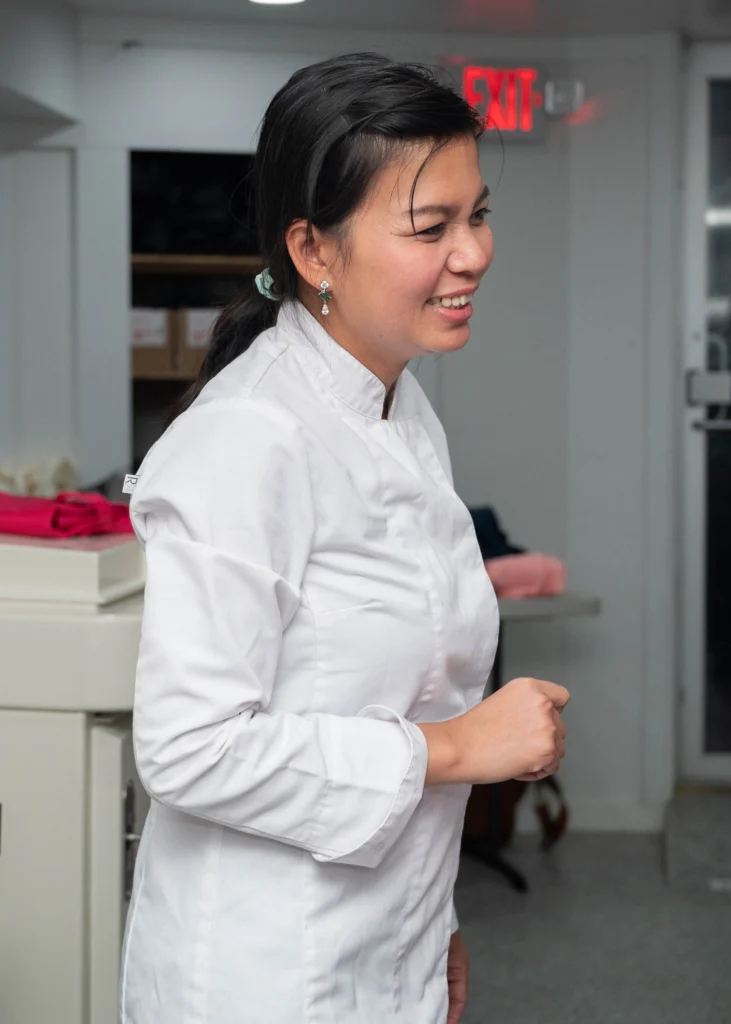
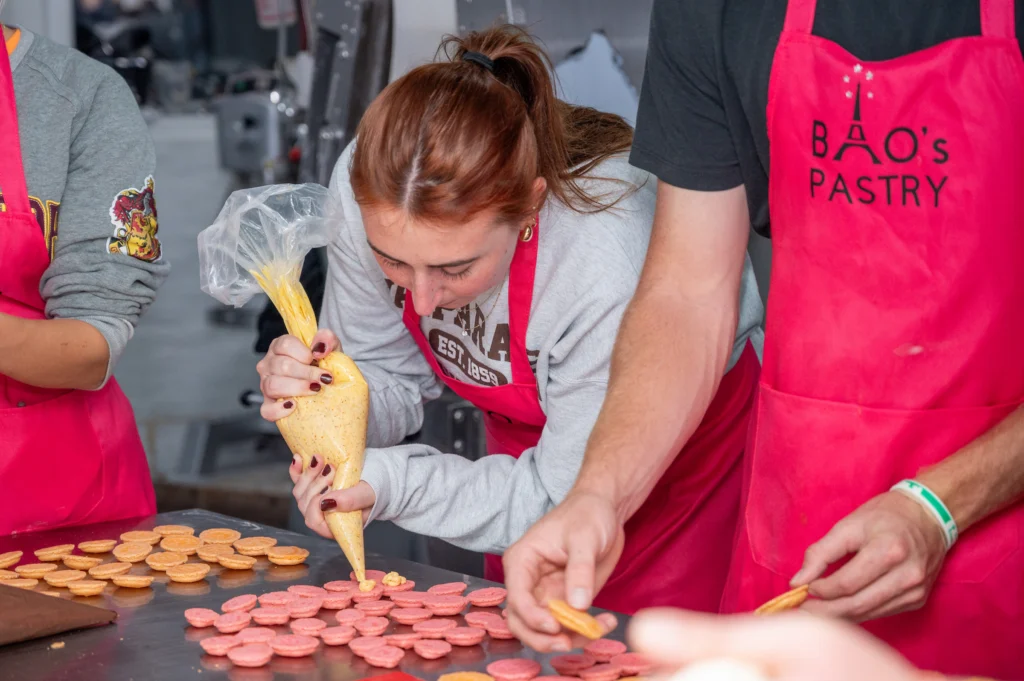
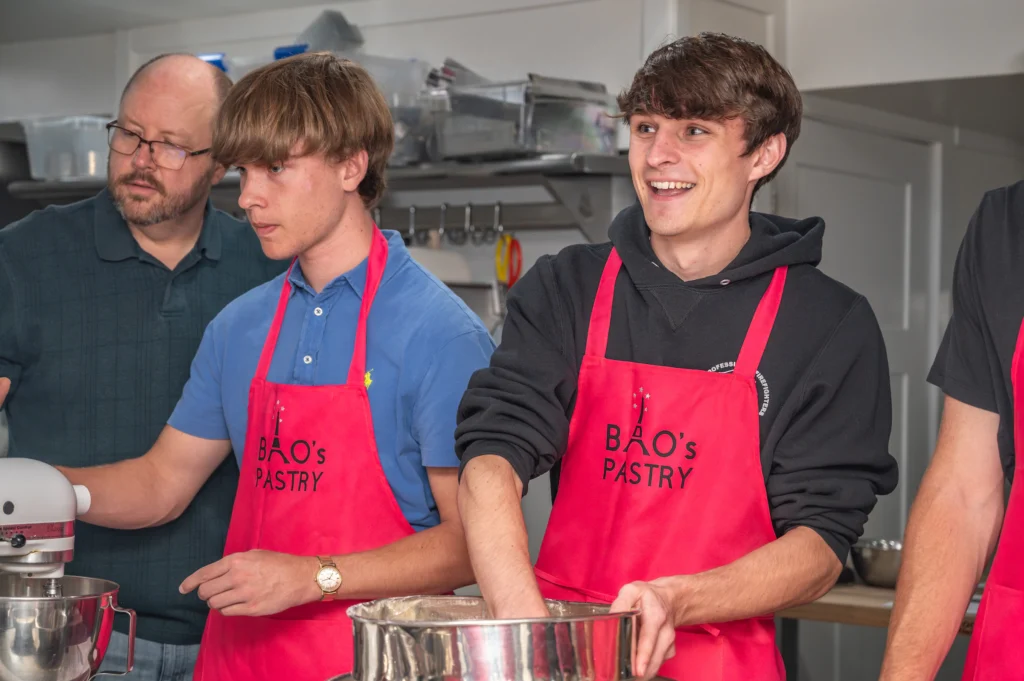
One of those experiences took place in the fall of 2025, when French students participated in the second annual pastry workshop hosted by Bao’s Pastry, a local business. Two groups of about a dozen students each attended two-hour workshops presented in French by Bao, the pastry chef herself.
During the workshop, students learned how to make and decorate traditional French macarons. Though some of the pastry-making vocabulary was new, students of all levels were able to follow Bao’s instructions in French and successfully replicate the recipe. At the end of the session, they left with a box of the pastries they had made themselves!
Experiential learning continued on campus in Professor Tomasik’s beginning French course, FREN 101. In the final unit of the course, students focus on food vocabulary – and for the last day of class, Professor Tomasik turned the classroom into an immersive activity called “Café Valpo.”
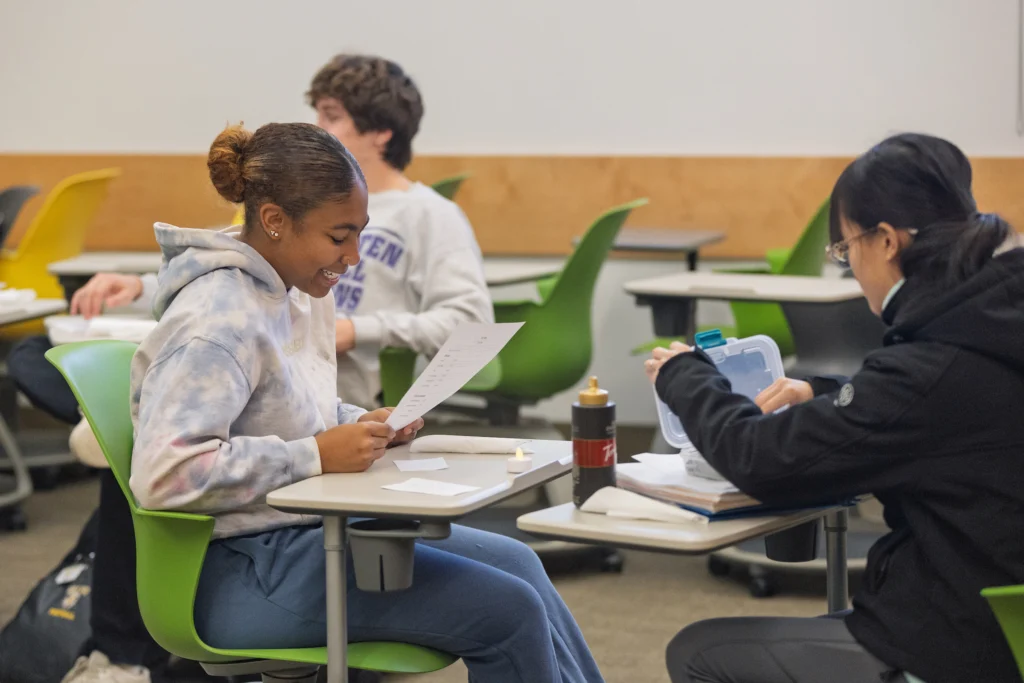
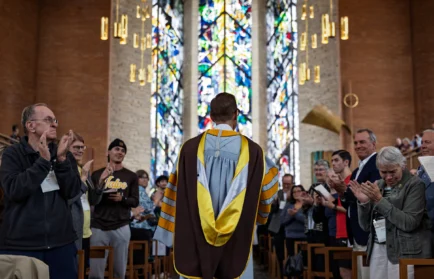
With Parisian café music playing, half of the class sat at café-style tables prepared to order drinks and pastries from a short menu. The other half worked in a makeshift kitchen, preparing orders. Professor Tomasik moved between the groups dressed as a Parisian serveur, taking orders from café patrons, communicating them to the kitchen, and serving the finished items.
The activity offered students an opportunity to actively practice their vocabulary in a setting designed to mirror the experience of ordering food in France. By recreating the atmosphere of a café, students were able to build confidence using French in a practical and memorable way.
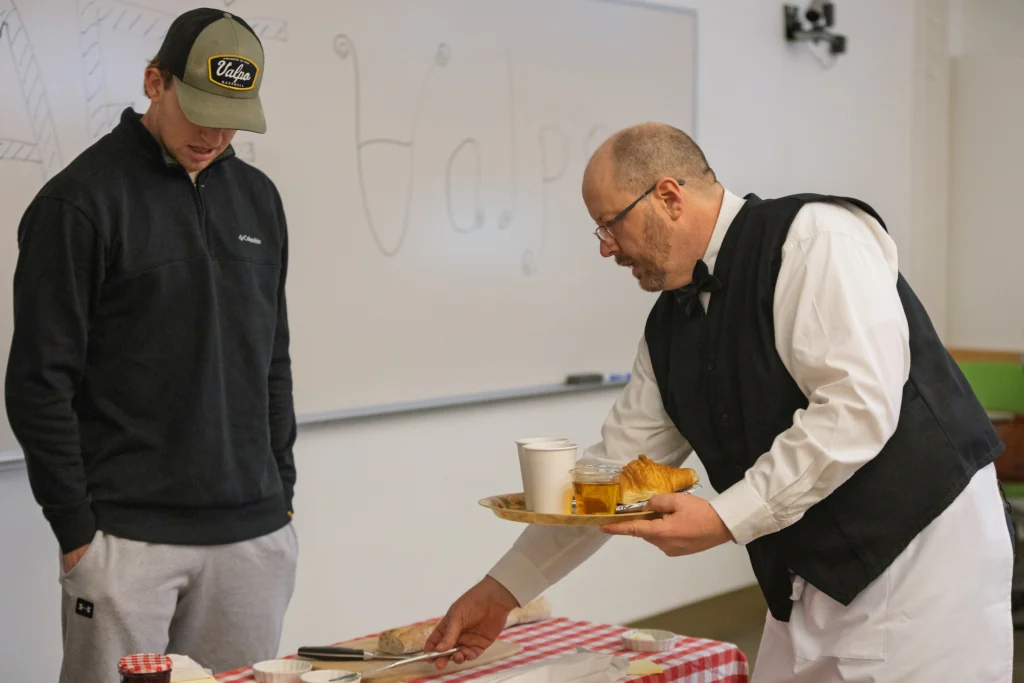
Food also plays an important role in Professor Tomasik’s FREN 300 course, Francophone Cultures of Food. Taught in English and open to a wider student audience, the course surveys key moments in the culinary history and culture of France, from medieval banquets to modern molecular gastronomy.
Throughout the semester, students participate in structured tastings of culturally significant foods. These range from everyday staples like a baguette to iconic dishes such as French onion soup. Students learn vocabulary for describing tastes and textures and complete tasting reports as part of their coursework.
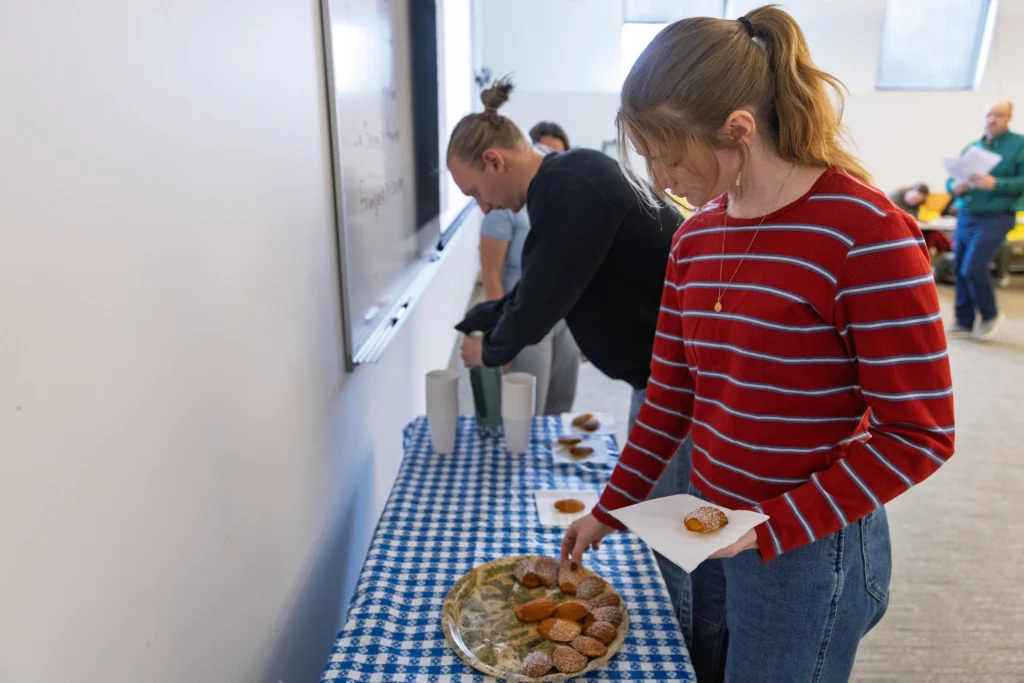
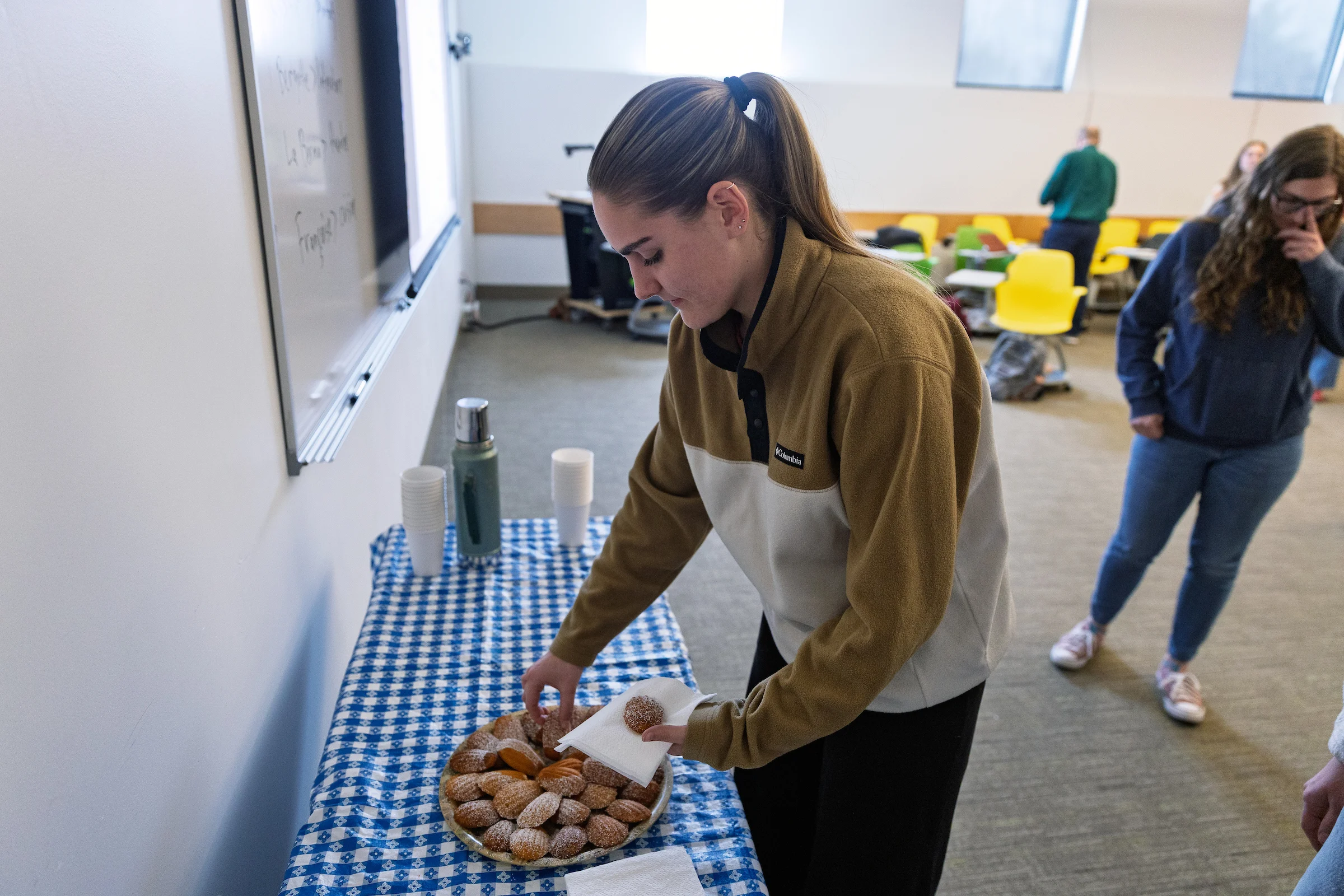
One recent tasting connected literature and cuisine in a particularly memorable way. While reading an excerpt from Marcel Proust – in which the taste of a shell-shaped madeleine sponge cake famously evokes memories from the narrator’s past – students had the opportunity to taste the pastry themselves.
“Reading about the history of French food is fascinating enough,” Professor Tomasik says. “But pairing readings with actual tastings of these foods brings the course material to life in ways that are hard to replicate.”
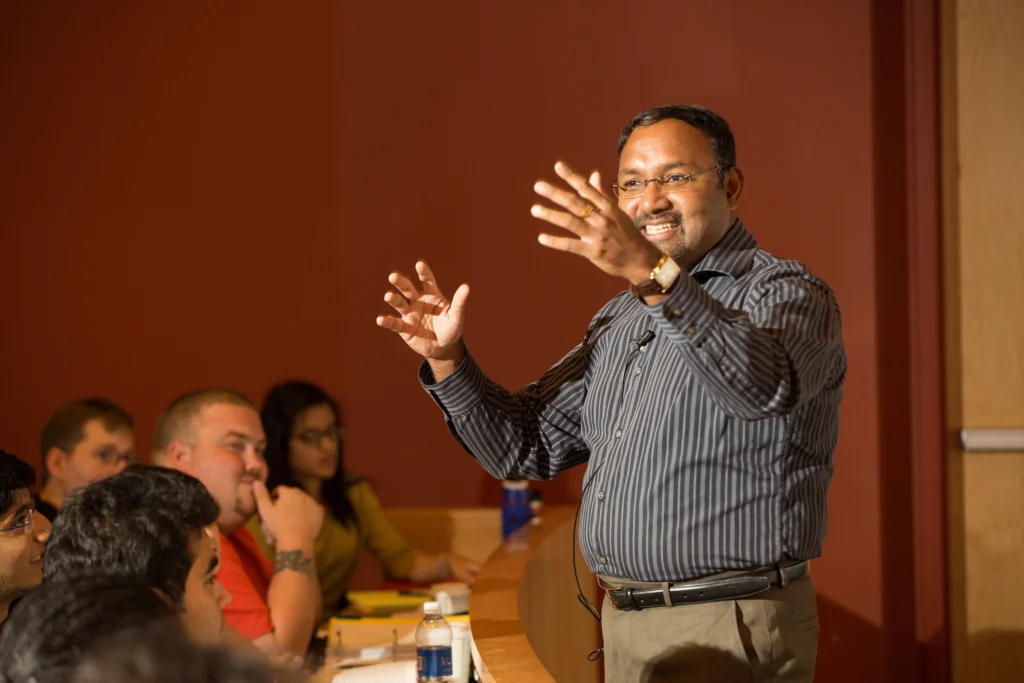
Looking ahead, Professor Tomasik hopes to continue expanding these experiential learning opportunities. He is currently developing a potential future course with Professor George Pati, Ph.D., from the Department of Religious Studies titled Food, Faith, and Festivals: East Meets West. The interdisciplinary course would explore theological and secular food traditions in France and India through a comparative lens and would include additional food tastings as part of the learning experience.
Through these immersive activities, Valpo’s French program is helping students experience language and culture in a way that is both memorable and meaningful – bringing the study of French to life one taste at a time.
Discover how studying French at Valpo connects language, culture, and (delicious) hands-on learning by visiting valpo.edu/world-languages-and-cultures today.