





The Valparaiso University Ozone Garden has indicated significant, unexpected spikes in overnight ozone levels. The preliminary findings are the result of a collaborative research project between Valpo faculty and students.
While ozone acts as a protective substance at higher altitudes, shielding the Earth from harmful ultraviolet radiation, it is generally considered a pollutant and detriment to air quality at lower altitudes. According to the American Lung Association, ground-level ozone is a major component of smog, and has the potential to contribute to respiratory health complications.
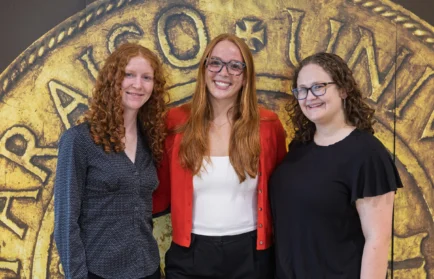
Katelyn Barber, Ph.D., assistant professor in the College of Arts and Science’s geology, meteorology and environmental sciences department has been accepted to the Department of Energy’s Summer Visiting Faculty Program to dig deeper into the issue. She’s joined by environmental science and meteorology major Lynne Thissen ’28, a student who is gaining a valuable opportunity to apply her classroom knowledge to a real-world research project.

The Ozone Garden works by planting ozone-sensitive plants, such as certain species of snap beans, milkweed and coneflower, alongside more ozone-resistant plants, like other types of snap bean. When the ozone-sensitive plants show signs of damage while the ozone resistant ones remain healthy, it can indicate elevated ozone levels.
“Plant damage is really the only way to visually recognize that ozone damage is occurring, and it takes time for that to accumulate enough to see the damage,” said Professor Barber.
Instruments in the garden indicate that the ozone spike is happening between midnight and 2 a.m.—a measurement that’s led to more questions about what’s happening.
“That’s pretty unusual when you think about the mechanisms of ozone,” she said. “It should be tied more closely to the sun cycle — with your highest concentration at 5 or 6 p.m.”
In addition to looking into the unusual time of the spikes, Professor Barber and Thissen are looking into whether the elevated ozone levels are a purely local phenomenon or a result of activity from a nearby region making its way over.
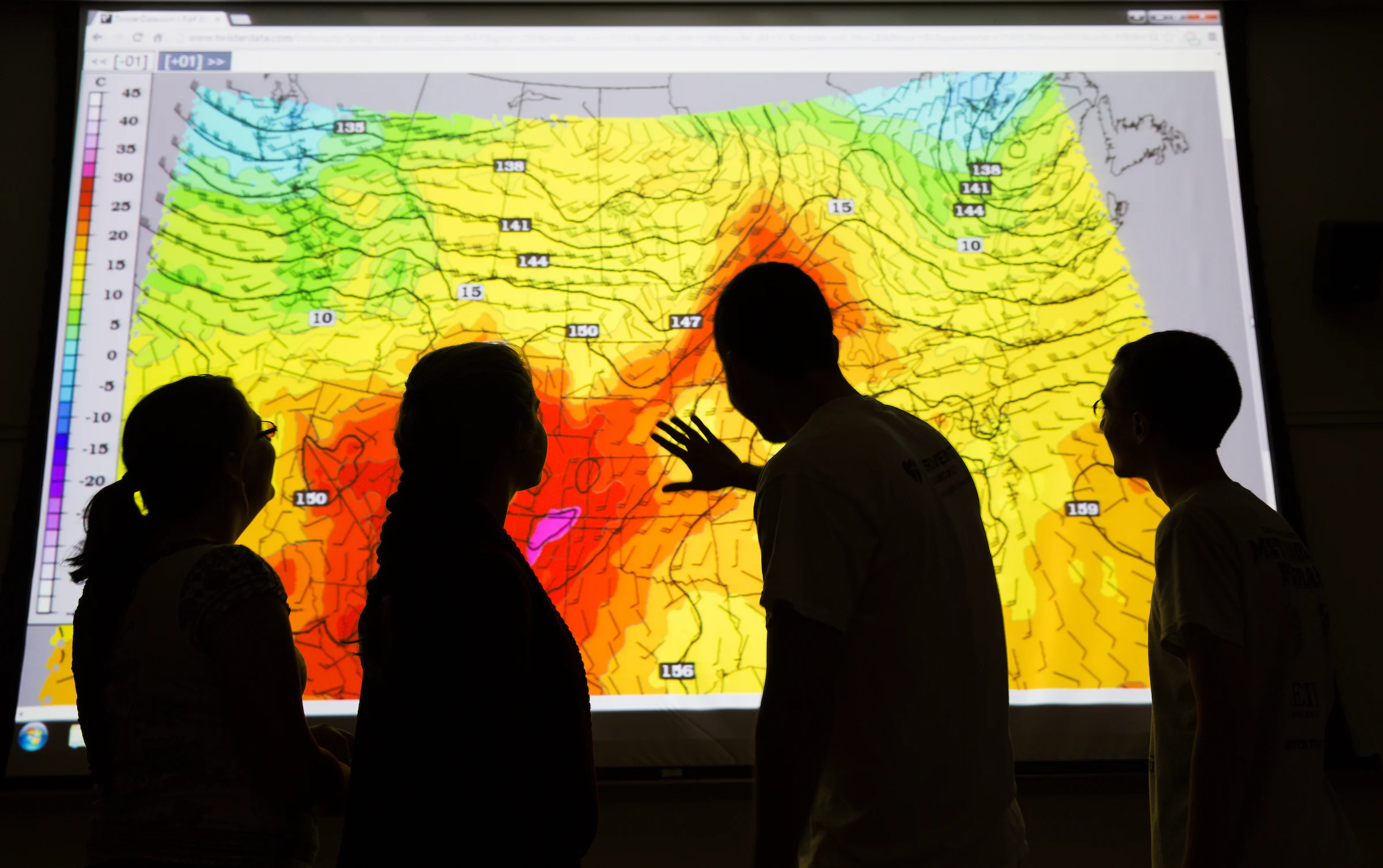
“Even three miles up the road, we’re not seeing the same result,” Thissen said. “So I’m combing through all of our EPA graphs and keeping note of where our peaks are versus those surrounding us.”
With the DoE program, Professor Barber will enter an intensive, 10-week research program that will give her access to the tools, resources, and experts in the field to develop a more comprehensive understanding of the ozone, further her research, better understand how the tools used to take measurements work, and bring all that knowledge back to the classroom to enhance the experience of current students in her department.
Thissen, also a student in Christ College—Valpo’s Honors College—joined the project at the start of the Fall 2025 semester to work on data gathered during the prior summer. Despite coming on board with no prior coding experience, Thissen quickly immersed herself in the research, developed the required skills, and gained exposure to a new aspect of her major.
The summer internship program will place Thissen with 30 other students in an intensive program studying scientific ethics, collaboration on code, digital tools like Github and much more.
“I’ll be learning a lot about the background of how to do good research while making new, meaningful connections,” Thissen said. “I’m excited to meet new people who are as interested in this stuff as I am.”
At the end of the process, Professor Barber and Thissen will be required to compile a report and share their findings, which are expected to be complete in late July.
Professor Barber and Thissen aren’t the only ones examining air quality in the Region. Chris Iceman, Ph.D., associate professor of chemistry has spent several years with students deploying purple air sensors. Students confronting issues of racial and environmental justice in Chicago and northwest Indiana during this year’s Spring Break Service Trips also set up new air quality sensors to monitor the area. Both projects are supplying data being used in the ozone study.