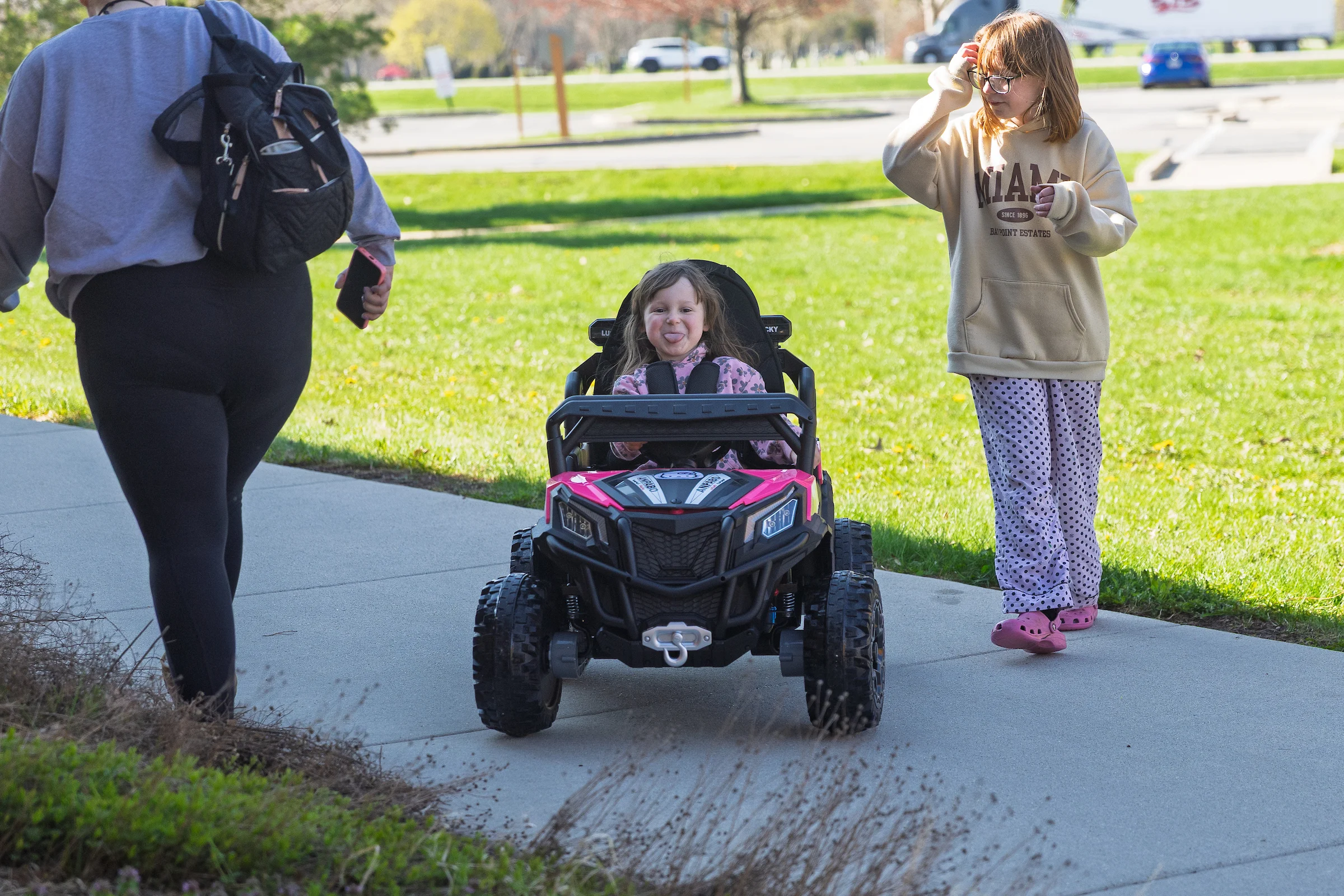
On Saturday, April 11, young people with mobility challenges and their families gathered at Valparaiso University’s Fites Innovation Center for a life changing moment: receiving customized vehicles designed to increase independence, participation and quality of life.
Through GoBabyGo’s Valpo Program, students from the College of Engineering and College of Nursing and Health Professions are working together to remove barriers to mobility by designing and building adaptive vehicles at no cost to families. The result is more than a technical achievement — it is expanded access to everyday experiences that many people take for granted.
“It’s not just about mobility; it’s about promoting participation, independence and joy and giving that to these kids,” said Peyton Throw ’26, who is leading the project as the capstone to her entry-level doctorate in occupational therapy (OT). “This is the first time, for many of these kids, that they get to decide when to go and where to go. It’s really powerful for a family to have that access.”
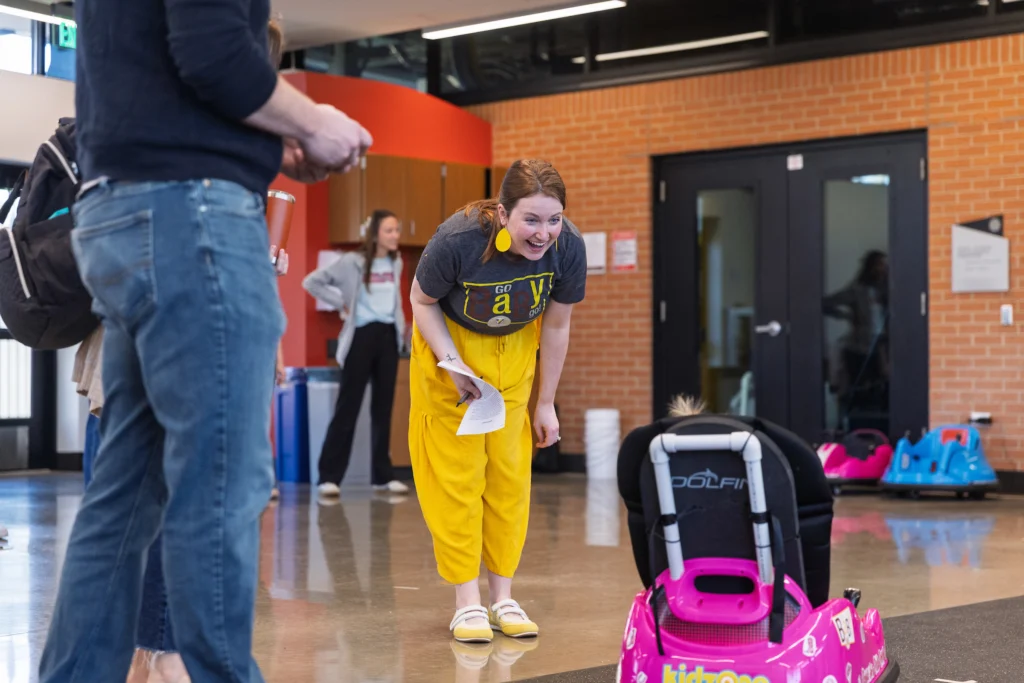
Access to powered mobility for very young children is often limited by very high costs and insurance barriers. Launched at Valparaiso University in 2024, the program addresses this gap by providing customized, no-cost solutions that allow people to explore their environments, develop motor skills and engage more fully in daily life.
For Rachel and Cameron Fehland, whose daughter, Rosie Jo, was born with mosaic Down syndrome and spent more than 130 days in the NICU, the impact is immediate and profound. Rosie’s vehicle is designed to build strength and coordination while giving her the freedom to move independently.
“The students have been phenomenal,” said Rachel. “They just loved her and she loves them right back. Anyone who’s asked, I’ve told them how amazing the program is — not just GoBabyGo, but the Valparaiso University team.”
Another recipient, Norah, needed assistance maintaining a stable, upright position while in motion. Engineering students identified and adapted a specialized car seat and added custom modifications to ensure safety and comfort. For her parents, Casey and Patrick Baize, the vehicle is a powerful opportunity for their daughter to experience childhood. “I’m just excited for her to do what other children get to do,” Casey said.
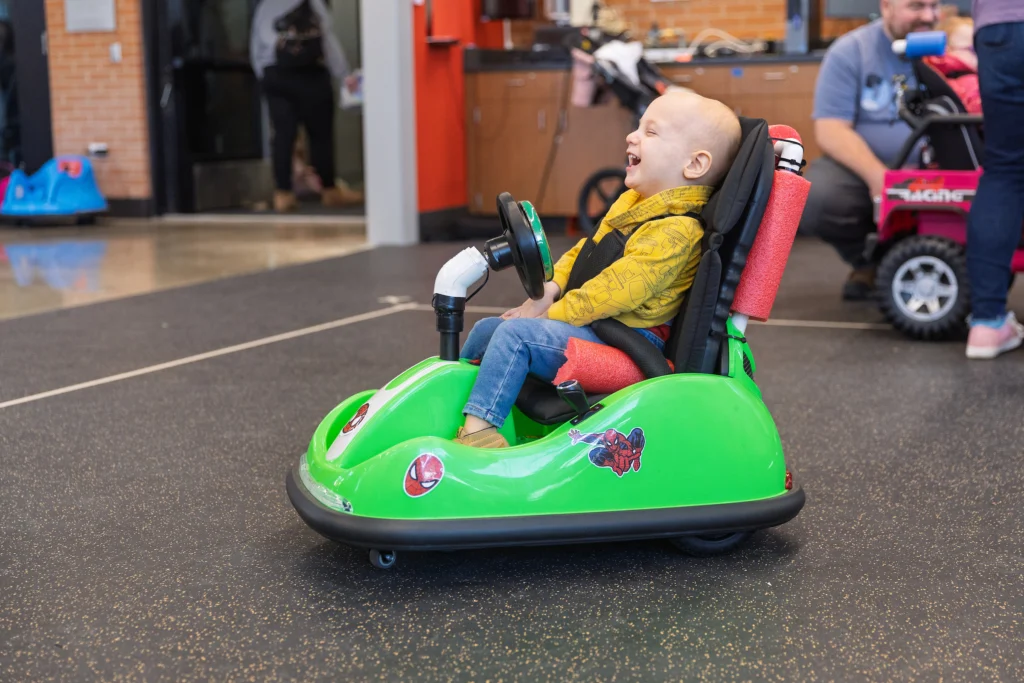
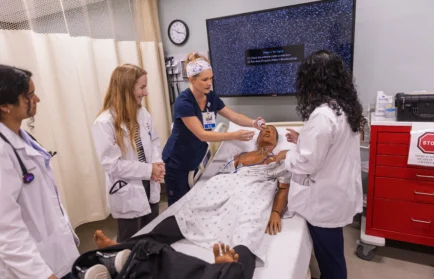
The program’s success is rooted in collaboration. Occupational therapy students evaluate each child’s needs and therapeutic goals, while engineering students translate those requirements into precise mechanical and design solutions. Together, they create highly personalized mobility devices that directly enhance each child’s ability to interact with the world.
“I think it’s awesome that we’re creating a new relationship between medical professionals and engineers to kind of bridge that gap between our specialities,” said student collaborator and engineering student Sophie Schoch ’27.
GoBabyGo’s Valpo program is supported by both the administrations of the participating colleges and third-party donations. In 2025, the St. Teresa of Avila Catholic Student Center raised money in a special Lenten project to support the program. GoBabyGo Valpo also received a generous donation from the Kiwanis Club of Valparaiso to help make this event possible.
Applications to participate are currently paused, but interested families can contact Theresa Carroll OTD, OTR/L, clinical associate professor of OT and doctoral capstone coordinator at gobabygo@valpo.edu to express their interest in the next round of builds in the 2026-2027 academic year.